Lyophilized Peptides: Storage, Handling, and Lab Guide
August 8, 2026 · STEPHAN ZOHAR

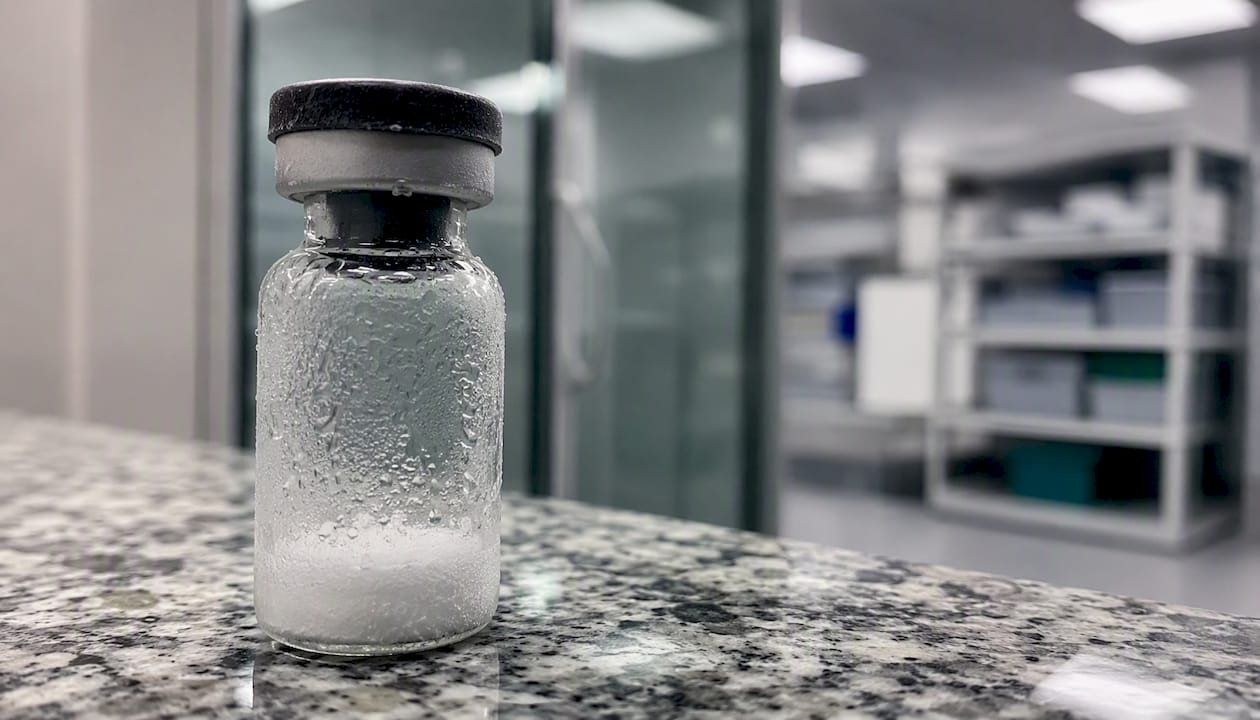
Lyophilized peptides are freeze-dried peptide powders from which the vast majority of water has been removed through a controlled sublimation process, leaving a stable solid matrix that resists the hydrolytic and oxidative degradation pathways that rapidly compromise peptides in solution. On receipt, the single most important action is to keep the sealed vial cold and dry until you are ready to work with it. Before opening, allow the vial to equilibrate to room temperature inside a desiccator. Then, aliquot into single-use portions before freezing.
Immediate lab actions on receipt:
- Keep the vial sealed and transfer it directly to −20°C or −80°C storage.
- Before first use, place the sealed vial in a desiccator and allow it to reach room temperature fully before opening — this prevents condensation from entering the vial.
- Aliquot the reconstituted material into single-use volumes to eliminate repeated freeze–thaw cycles.
- Verify identity and purity against the Certificate of Analysis (COA), including HPLC chromatogram and mass spectrometry (MS) confirmation.
Neolabpeptides supplies all research-grade peptides with a COA documenting ≥98% purity verified by third-party HPLC and MS, giving you a documented baseline before any experiment begins.
Pro Tip: Never open a cold vial directly from the freezer. Atmospheric moisture will condense inside the vial and accelerate degradation from the first use.
Key Takeaways
Lyophilized peptides require cold, dry, oxygen-limited storage, sequence-aware temperature selection, and COA-backed QC at every stage from receipt to assay.
| Point | Details |
|---|---|
| Storage temperatures | Use −20°C for routine working stocks; reserve −80°C for labile sequences (Cys, Met, Trp, Asn, Gln). |
| Equilibration before opening | Always warm sealed vials to room temperature in a desiccator to prevent moisture condensation. |
| Aliquoting discipline | Divide reconstituted stock into single-use aliquots immediately; never refreeze a thawed aliquot. |
| QC verification | Confirm identity and purity by MS and HPLC against the COA before committing material to an assay. |
| Neolabpeptides | Supplies research-grade lyophilized peptides with ≥98% purity, third-party HPLC/MS verification, and full COA documentation. |
Table of Contents
- How does the lyophilization process work?
- Lyophilized vs. solution-phase peptides: which form fits your workflow?
- Step-by-step protocol for receiving, reconstituting, and preparing peptides
- How do you identify degradation and verify peptide integrity?
- Safety, regulatory, and institutional requirements for US labs
- What should you require from a lyophilized peptide supplier?
- Why these practices matter more than most labs admit
- Neolabpeptides: verified research-grade peptides, ready for your lab
- Authoritative sources for further reading
How does the lyophilization process work?
Lyophilization, formally defined as freeze-drying, removes water from a frozen product by sublimation under vacuum rather than by heat-driven evaporation. Because peptides and biologics degrade rapidly at elevated temperatures, this low-temperature drying method preserves chemical structure in a way conventional drying cannot. The FDA’s inspection guidance for lyophilized parenterals identifies potency, sterility, and stability as the three primary concerns the process must protect — a framework that applies equally to research-grade peptide manufacture.
The process runs in three sequential stages:
- Freezing: The peptide solution is cooled below its eutectic or glass-transition temperature, converting free water to ice and immobilizing the solute matrix. Controlled freezing rates influence ice crystal size, which in turn affects the porosity of the final cake and how efficiently vapor escapes during drying.
- Primary drying (sublimation): Chamber pressure is reduced to below the vapor pressure of ice, and a modest shelf temperature drives ice directly from solid to vapor. A condenser traps the vapor before it can re-enter the product. AbbVie’s technical primer notes that slow, controlled drying at this stage preserves cake structure and reconstitutability — rushing it collapses the porous matrix.
- Secondary drying (desorption): Shelf temperature rises further to remove bound, unfrozen water adsorbed to the solute surface. This stage determines residual moisture, typically targeted below 1–3%. Published stability data show that residual moisture above this range correlates with accelerated solid-state deamidation and Maillard-type adduction.
Two additional formulation variables matter for downstream stability:
- Excipients: Sugars such as mannitol and trehalose act as cryoprotectants and bulking agents, forming a glassy matrix that physically stabilizes the peptide during drying and storage. New England Biolabs’ lyophilization overview details how protectant choice affects residual moisture and long-term biological activity.
- Headspace oxygen: Residual oxygen in the sealed vial drives oxidation of susceptible residues. Suppliers who backfill vials with argon or nitrogen before sealing reduce this risk substantially.
Lyophilized vs. solution-phase peptides: which form fits your workflow?
The choice between a freeze-dried powder and a ready-made peptide solution comes down to one variable: how long the material needs to remain chemically intact before use.
Peer-reviewed stability literature confirms that removing bulk water in the solid state dramatically slows the dominant degradation pathways — hydrolysis, deamidation, and oxidation — that proceed rapidly in aqueous solution. A peptide that remains stable for an extended period as a lyophilized powder at −20°C may degrade meaningfully within days or weeks once dissolved, depending on pH, temperature, and sequence.
Advantages of lyophilized form:
- Greatly reduced hydrolysis and deamidation rates in the solid state.
- Longer shelf life without cold-chain interruption causing irreversible loss.
- Easier shipping and storage at −20°C versus the more demanding requirements of frozen solutions.
- Flexibility to reconstitute at the concentration and in the solvent your assay requires.
Advantages of pre-dissolved solutions (and their limits):
- Immediate use without a reconstitution step — useful for high-throughput screening where time per sample matters.
- Consistent concentration if prepared by the supplier under validated conditions.
- The trade-off is real: aqueous solutions support microbial growth, accelerate hydrolytic cleavage, and have a shelf life measured in days to weeks rather than months.
Practical decision rules:
- Request lyophilized material for any peptide you will not use within 48–72 hours of reconstitution, or for sequences containing Cys, Met, Trp, Asn, or Gln that are especially prone to oxidation or deamidation.
- Pre-dissolved solutions are appropriate only when the assay timeline is short, the concentration is fixed, and the peptide sequence is chemically stable in aqueous conditions.
Pro Tip: If a supplier only offers a peptide in solution form, ask whether lyophilized stock is available. For labile sequences, the stability difference justifies the extra reconstitution step every time.
Step-by-step protocol for receiving, reconstituting, and preparing peptides
Receiving and initial storage
- On receipt, verify the vial label against the COA — confirm peptide name, lot number, stated purity, and recommended storage temperature.
- Transfer the sealed vial immediately to the appropriate freezer (−20°C or −80°C per sequence requirements).
- Log the receipt date, lot number, and storage location in your lab inventory system.
Equilibration before opening
- When ready to use, remove the vial from the freezer and place it — still sealed — inside a desiccator.
- Allow the vial to reach room temperature fully before opening. This step prevents atmospheric moisture from condensing on the cold powder, which would introduce water and begin degradation immediately.
Solvent selection
- Start with sterile water or phosphate-buffered saline (PBS) for hydrophilic sequences. Many standard peptides dissolve readily in aqueous media at neutral pH.
- If solubility is poor, try dilute acetic acid (0.1% v/v) for basic peptides or dilute ammonium hydroxide for acidic ones. For acidic solubilization protocols, refer to established lab guidance on acetic acid use with peptides.
- For hydrophobic sequences that resist aqueous dissolution, add a small volume of DMSO or acetonitrile (ACN) to achieve initial dissolution, then dilute into aqueous buffer. Avoid DMSO when the sequence contains Met or Cys residues — DMSO can oxidize these side chains.
- Test solubility on a small portion (10–20% of total material) before committing the full vial.
Reconstitution and aliquoting
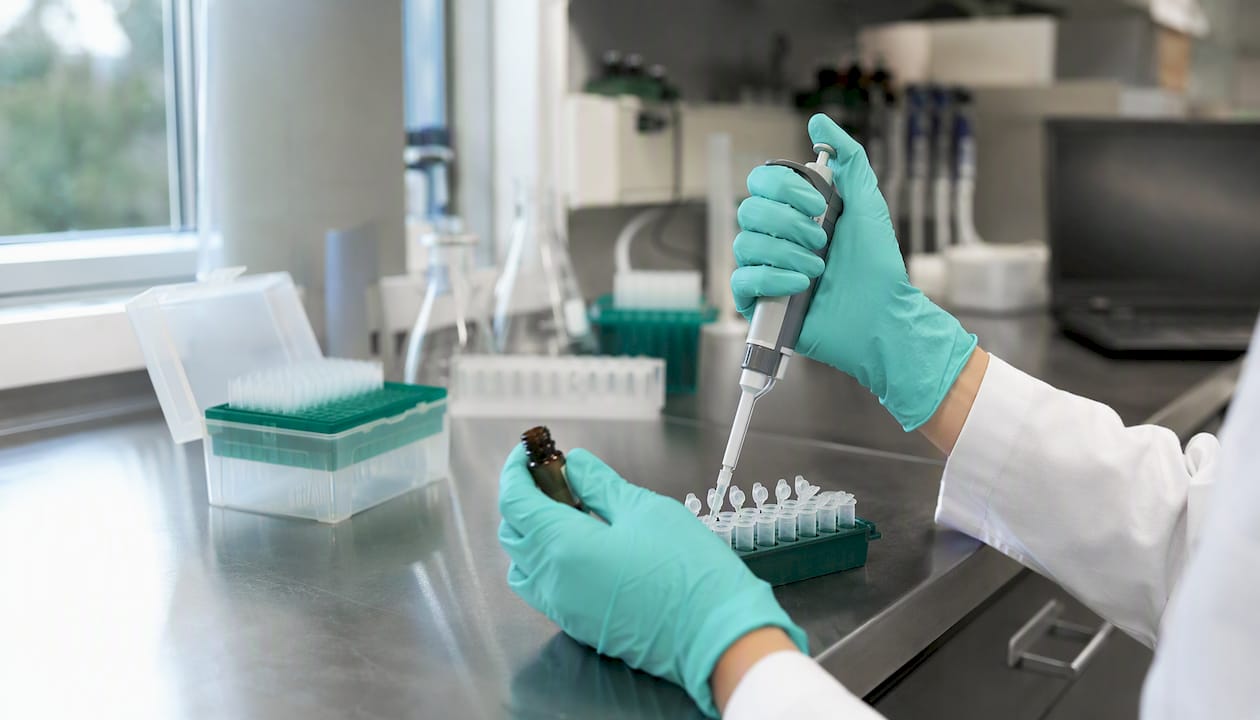
- Add solvent slowly to the lyophilized powder rather than adding powder to solvent. Gentle vortexing or brief sonication (10–15 seconds) aids dissolution without shearing the peptide.
- For assays requiring sterile conditions, pass the reconstituted solution through a 0.22 µm filter before use.
- Divide the reconstituted stock into single-use aliquots at your working concentration. Use a reconstitution calculator to confirm target volumes and concentrations before pipetting.
- Freeze aliquots immediately at −20°C or −80°C. Do not refreeze a thawed aliquot.
- Recommended working concentrations for most bioassays fall in the 0.1–10 mg/mL range, though assay-specific requirements vary.
- Record the reconstitution solvent, concentration, date, and operator on each aliquot tube.
Pro Tip: Prepare a master stock at a higher concentration (e.g., 10 mg/mL) and dilute fresh for each assay. This reduces the total number of freeze–thaw cycles on any single aliquot.
How do you identify degradation and verify peptide integrity?
Degradation in lyophilized peptides is not always obvious, but several visual and analytical indicators give you an early warning before an experiment is compromised.
Visual inspection
- Discoloration: — Yellowing or browning of the powder indicates oxidation or Maillard-type reactions, particularly in peptides containing Trp, Tyr, or reducing sugars as excipients.
Solubility problems
| Observation | Likely Cause | Recommended Action |
|---|---|---|
| Incomplete dissolution | Hydrophobic sequence; insufficient solvent polarity | Escalate to ACN or DMSO; dilute into buffer |
| Gelling or viscous solution | Aggregation; concentration too high | Dilute; sonicate briefly; lower concentration |
| Cloudy solution after filtration | Particulate aggregates | Re-sonicate; check pH; try alternate buffer |
| No dissolution in any solvent | Severe degradation or wrong solvent | Request supplier reinvestigation; compare MS |
QC checklist
- Mass confirmation by MS: Compare the observed molecular ion to the theoretical mass from the COA. A mass shift of +16 Da suggests methionine or tryptophan oxidation; +1 Da suggests deamidation of Asn or Gln.
- HPLC purity: Run a reverse-phase HPLC trace and compare the chromatogram to the supplier’s COA chromatogram. New peaks or a reduced main-peak area indicate degradation products. Established proteomics methods provide technical frameworks for MS and HPLC confirmation workflows applicable to research peptides.
- Escalate to third-party testing when the in-house HPLC trace diverges from the COA by more than 2% purity, when MS shows unexpected adducts, or when bioassay results are inconsistent with expected potency. For guidance on third-party peptide testing, institutional labs can request independent HPLC/MS verification against the original lot.
Safety, regulatory, and institutional requirements for US labs
All research-grade lyophilized peptides supplied for in vitro or preclinical work carry a research-only designation. They are not approved for human or veterinary use, and institutional researchers must maintain the documentation to demonstrate that use remains within those boundaries.
Labeling and institutional compliance:
- Confirm that every vial is labeled “For Research Use Only — Not for Human or Veterinary Use” before accepting receipt.
- Maintain institutional approval records (IBC, IACUC, or IRB as applicable) that cover the specific peptides and experimental protocols in use.
- Keep chain-of-custody records linking each lot number to its COA, receipt date, and assigned researcher.
Safety documentation and PPE:
- Request a Safety Data Sheet (SDS, formerly MSDS) from the supplier for each compound. Most synthetic peptides present low acute toxicity, but some sequences or excipients may carry specific hazard classifications.
- When weighing lyophilized powder, use a fume hood or biosafety cabinet and wear appropriate PPE (nitrile gloves, lab coat, eye protection). Fine powders generate aerosols that can be inhaled.
- Dispose of unused material according to your institution’s chemical waste protocols.
Regulatory context:
- The FDA’s lyophilization guidance for parenterals sets manufacturing and stability expectations relevant when lyophilized peptides are being prepared for preclinical injectable formulations. Researchers preparing formulations for animal studies should consult this guidance and their institutional veterinary or compliance officers.
- Follow supplier handling instructions precisely. Deviating from stated storage conditions can void the supplier’s quality guarantee and compromise the integrity of your COA documentation.
This article provides general laboratory guidance, not legal or regulatory advice. Confirm current institutional and federal requirements with your compliance officer or a qualified regulatory professional.
What should you require from a lyophilized peptide supplier?
Purchasing decisions for research peptides should be driven by documentation, not price alone. The following checklist reflects minimum standards for institutional procurement.
Minimum documentation to require:
- COA with HPLC chromatogram (not just a purity percentage) and MS confirmation of molecular weight.
- Stated purity of ≥98% by HPLC — sequences below this threshold introduce impurity variables that compromise dose-response data.
- Salt form and excipient disclosure (e.g., TFA vs. acetate salt; presence of mannitol or trehalose) — these affect solubility, pH on reconstitution, and cell-based assay compatibility.
- Recommended storage temperature and expiration or retest date.
- Lot number with traceability to the synthesis and testing batch.
Product features worth requesting:
- Single-use aliquoting service for high-value or labile sequences.
- Argon or nitrogen backfill and desiccant packaging to minimize headspace oxygen and moisture.
- Excipient information, particularly for sequences that will be used in cell-based or in vivo assays where sugar excipients could confound results.
- Third-party stability data or accelerated stability testing results where available.
Procurement checklist for purchasing officers:
- Intended use statement confirming research-only designation.
- Vendor transparency on manufacturing standards — GMP certification criteria and manufacturing compliance documentation are the relevant benchmarks.
- Confirmation that HPLC and MS testing are performed by a third party, not solely in-house.
Neolabpeptides meets these criteria directly: every product ships with a COA documenting ≥98% purity by third-party HPLC and MS, with full lot traceability and research-only labeling. Sequence-specific purity metrics and HPLC interpretation are documented in the supplier’s published lab guides.
Pro Tip: Always request the actual HPLC chromatogram, not just the stated purity number. A single broad peak at 97% and a clean sharp peak at 97% represent very different material — the chromatogram tells you which one you have.
Why these practices matter more than most labs admit
The gap between knowing these protocols and actually following them consistently is where most experimental variability originates. Researchers routinely attribute inconsistent dose-response curves, failed binding assays, or irreproducible in vivo results to biological noise — when the more likely explanation is a degraded or improperly reconstituted peptide stock.
Sequence-aware storage decisions are particularly undervalued. Storing a Met-containing peptide at −20°C instead of −80°C, or opening a cold vial without equilibration, introduces oxidation products that are invisible to the naked eye but detectable by MS as a +16 Da shift. Those products compete with the intact peptide at the receptor level and compress your signal without triggering any obvious experimental failure. The assay runs, the data looks plausible, and the error goes undetected.
Single-use aliquoting is the single highest-return practice in this entire workflow. The material cost of preparing 20 aliquots instead of one large stock is negligible. The cost of repeating three assays because a repeatedly thawed stock degraded is not. COA verification and HPLC comparison before first use take less than an hour and eliminate an entire category of experimental uncertainty. These are not bureaucratic steps — they are the difference between data you can publish and data you have to explain away.
Neolabpeptides: verified research-grade peptides, ready for your lab
Researchers who need lyophilized peptides with documented purity get a concrete advantage from working with a supplier whose verification is independent, not self-reported. Neolabpeptides provides every order with a third-party COA confirming ≥98% purity by HPLC and MS, argon-compatible packaging, and research-only labeling that satisfies institutional procurement requirements out of the box.

The catalog covers peptides including IPAMORELIN, CJC-1295, TB500, BPC-157, GLP-1 analogs, NAD+, and GHK-CU, all supplied in lyophilized form with full lot traceability. Fast US shipping means your verified stock arrives ready to store, not already compromised by extended transit. For researchers who need aliquoting support or sequence-specific stability documentation, contact the team directly through the product pages.
Browse the full catalog and review available COAs at neolabpeptides.com.
Authoritative sources for further reading
The following sources provide regulatory guidance, peer-reviewed methods, and technical primers for researchers who need deeper protocol detail or formal stability study frameworks.
- Lyophilization (parenteral) — FDA
- PubMed: Review on peptide stability and lyophilization
- Peptide storage and handling: lyophilized vs reconstituted — CompoundReview
- PubMed: Kinetic studies on peptide degradation paths
- DOI: Proteomics/methods paper relevant to peptide analytical workflows
- Lyophilization — Wikipedia
- What is lyophilization? | AbbVie CMO
- What is lyophilization? | New England Biolabs
Recommended
This article summarizes published research for informational purposes. Products sold by Neo Lab Peptides are for laboratory research use only and are not intended for human or animal use.