
A nasal spray reconstitution solution is a precision diluent used to convert lyophilized peptide powder into a stable, accurately dosed liquid for intranasal delivery. For researchers preparing peptide nasal sprays, the choice of diluent directly determines formulation stability, dosing reproducibility, and shelf life. The most widely used option is bacteriostatic water containing 0.9% benzyl alcohol, which inhibits bacterial growth across a several-week refrigerated window. Sterile saline is an alternative, though it lacks preservative action and requires use within 24–48 hours at room temperature.
Key trust signals researchers should verify before sourcing any reconstitution solution or peptide:
- Third-party batch testing via HPLC and mass spectrometry
- Certificates of Analysis (COA) included with every product
- US manufacturing and documented quality controls
- Research-grade purity at 98% or above
Suppliers such as Alpha Omega Peptides, Simple Peptide, and American Peptides offer dedicated nasal spray reconstitution solutions formulated for peptide research. Neolabpeptides similarly provides research-grade peptides verified by HPLC and mass spectrometry, with COAs accompanying all products.
What makes a high-quality reconstitution solution?
The defining characteristic of a research-grade reconstitution solution is verified sterility combined with a preservative system that maintains that sterility across multiple draws. Bacteriostatic water with 0.9% benzyl alcohol is the standard for multi-dose vials because it actively inhibits bacterial proliferation without destabilizing most peptide structures. Sterile saline, by contrast, is isotonic and more comfortable on nasal mucosa, but lacks bacteriostatic protection, limiting its practical shelf life.
Core features to evaluate:
- Purity and sterility: USP-grade water, endotoxin-tested, free of particulates
- Preservative concentration: 0.9% benzyl alcohol in bacteriostatic water for multi-dose use
- Osmolality: Saline matches nasal mucosal tonicity; bacteriostatic water is hypotonic and may cause mild stinging
- pH compatibility: Most peptides are stable in the 5–7 range; bacteriostatic water reconstitution typically lands within this window automatically
- Batch documentation: COA confirming sterility and composition for each lot
Researchers who verify COA data before use reduce the risk of introducing contaminants that could compromise experimental results. Reviewing a peptide COA is a straightforward process once you know what to look for.
Which peptides are compatible, and how do pH and osmolality affect stability?
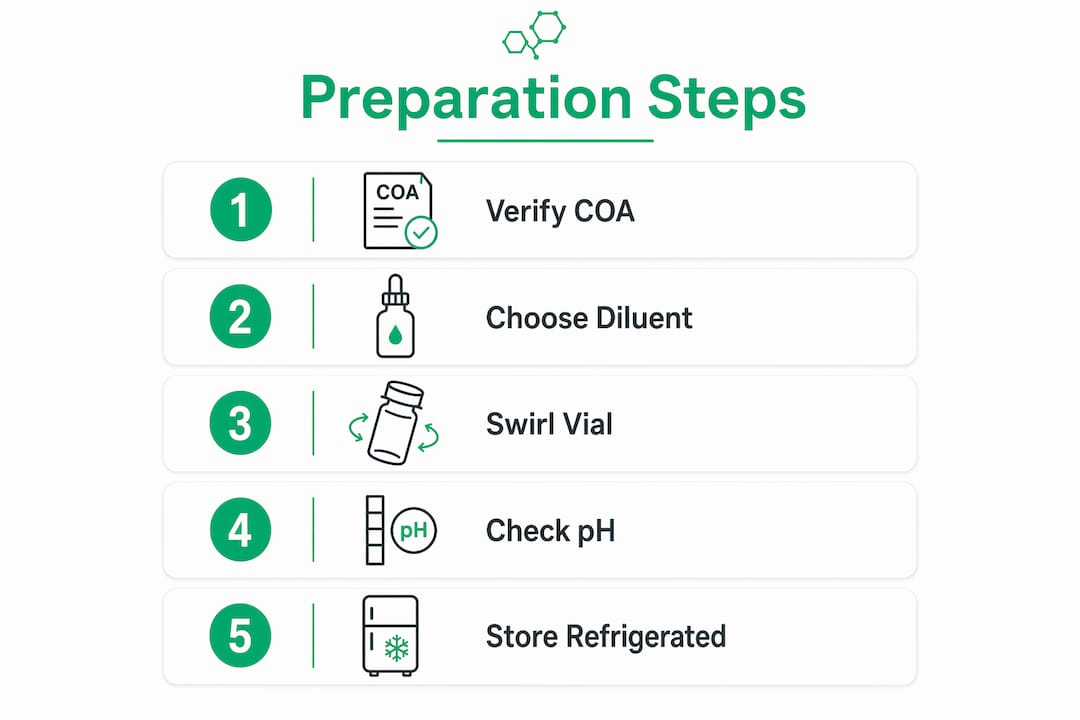
Most water-soluble research peptides reconstitute cleanly in bacteriostatic water. Semax, Selank, Oxytocin, DSIP, and BPC-157 all have established concentration protocols using bacteriostatic water as the standard diluent. For example, a 30 mg Semax vial reconstituted with 6 mL of bacteriostatic water yields 5 mg/mL, delivering 500 mcg per 0.1 mL pump.
pH and osmolality both affect how long a peptide remains bioactive in solution:
- pH: Peptides degrade faster at pH extremes. Semax is stable across pH 5.5–6.5; standard bacteriostatic water reconstitution falls within this range without adjustment.
- Osmolality: Bacteriostatic water is hypotonic relative to nasal fluid. Saline is isotonic, reducing mucosal irritation but eliminating bacteriostatic protection.
- Preservative sensitivity: Most peptides tolerate 0.9% benzyl alcohol well. DSIP is notably less stable in solution and should be used within two weeks regardless of diluent.
The choice between saline and bacteriostatic water comes down to use frequency. Daily-use peptides like Semax or Selank can work with saline if the batch is consumed within 24–48 hours. For peptides dosed two to three times per week, bacteriostatic water’s 2–4 week refrigerated stability makes it the practical choice.
Pro Tip: Never adjust pH with strong acids or bases after reconstitution unless your protocol specifically requires it. Most peptides reconstituted in bacteriostatic water land in a stable pH window automatically, and unnecessary adjustments introduce more risk than they resolve.
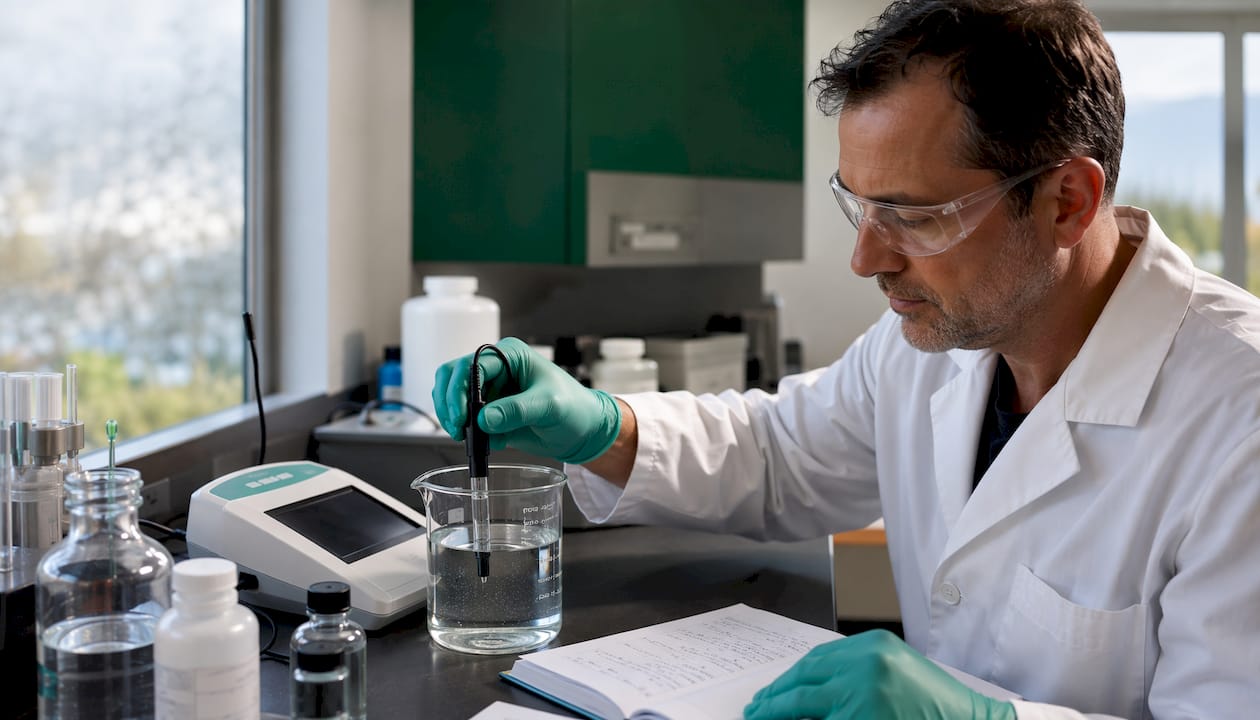
Step-by-step preparation protocol for peptide nasal sprays
Proper technique during reconstitution protects peptide bioactivity and prevents contamination. The full process takes about 10 minutes once you have done it a few times.
- Wipe vial septa. Clean the top of both the peptide vial and the bacteriostatic water vial with fresh alcohol swabs. Allow 15 seconds to air dry.
- Calculate your target concentration. Divide total peptide mass (mcg) by diluent volume (mL), then multiply by 0.1 to get mcg per spray. A peptide reconstitution calculator eliminates decimal errors.
- Draw bacteriostatic water into a 1 mL insulin syringe (29–31 gauge).
- Inject slowly down the vial wall. Angle the needle tip against the inner glass wall and push the plunger gradually. This prevents foaming and minimizes shear stress on the peptide.
- Swirl gently for 20–30 seconds. Do not shake, invert, or vortex. Shear stress denatures peptides and can produce inactive aggregates.
- Let the solution settle for 2–3 minutes. The solution should be clear and colorless. Discard if cloudy or particulate.
- Transfer to a metered-dose nasal spray bottle using a fresh insulin syringe. Standard bottles hold approximately 8–10 mL and deliver 0.1 mL per pump.
- Prime the pump by actuating 3–5 times into the air until a consistent fine mist appears. This fills the dosing tube so the first spray delivers a full dose.
- Label the bottle with peptide name, concentration, preparation date, and expiration date.
- Refrigerate immediately at 2–8°C. Keep away from direct light.
Pro Tip: If powder has not fully dissolved after 30 seconds of swirling, set the vial at room temperature for 2–5 minutes before swirling again. Forcing dissolution by shaking risks peptide denaturation.
Why nasal delivery is favored in peptide research
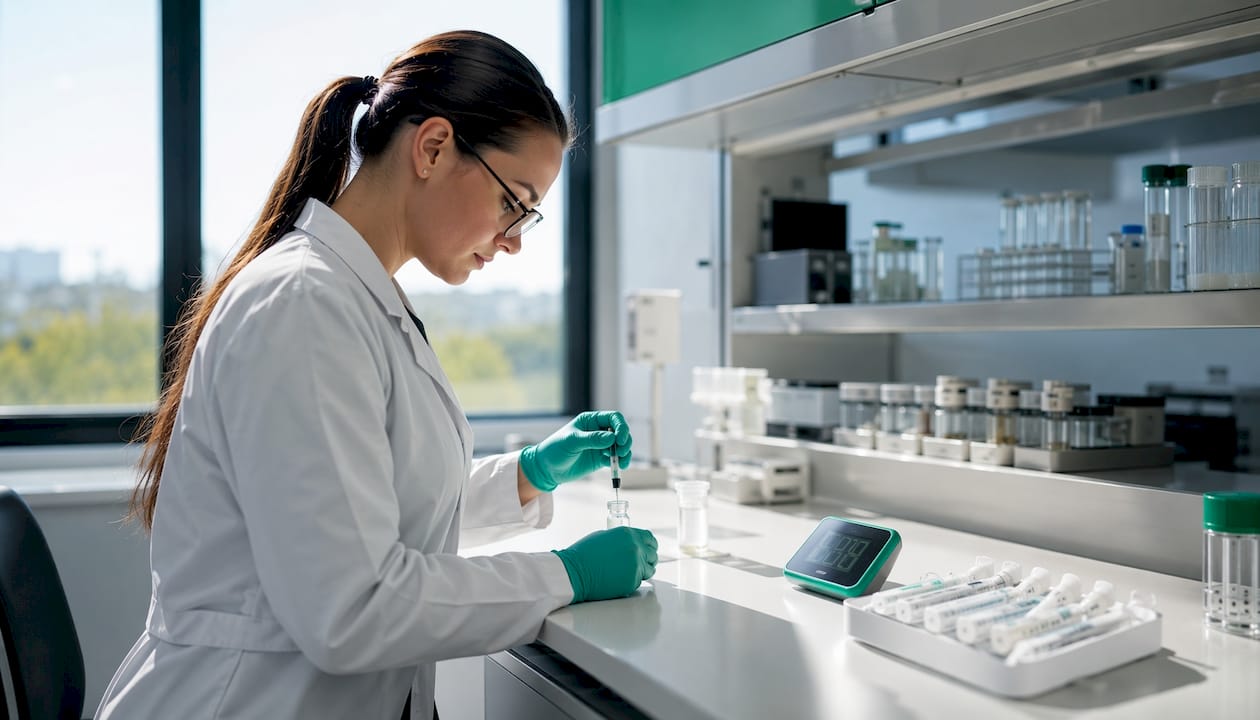
The nasal route offers several pharmacokinetic advantages that make it a preferred administration method in peptide research. The nasal cavity provides rich vasculature and a large surface area, enabling rapid absorption while bypassing first-pass hepatic metabolism. For CNS-targeted peptides, the olfactory and trigeminal pathways offer a direct nose-to-brain transport route that injectable or oral routes cannot replicate.
Research applications where nasal delivery is particularly relevant:
- CNS peptide studies: Semax, Selank, and DSIP are studied intranasally for neurological and anxiolytic effects
- Systemic bioavailability research: Oxytocin and BPC-157 studies leverage nasal delivery for rapid plasma uptake
- Non-invasive dosing protocols: Nasal administration eliminates injection-site variables, simplifying repeated-measure study designs
Bacteriostatic water preparations remain stable for 28–30 days refrigerated, which aligns well with typical multi-week research protocols. Saline-based preparations require batch preparation every 24–48 hours at room temperature or every 3–5 days if refrigerated, adding procedural burden to longer studies.
Safety and handling precautions for reconstitution solutions
Bacteriostatic water is appropriate for adult research use but carries a documented contraindication: benzyl alcohol toxicity in neonates has been linked to gasping syndrome in premature infants. This is not relevant to laboratory peptide research with adult subjects, but it should be noted in any formulation documentation or labeling.
Additional handling precautions:
- Store bacteriostatic water vials at room temperature before use; do not freeze
- Use a fresh alcohol swab on the vial septum before every draw
- Never share nasal spray bottles between research subjects to prevent cross-contamination
- Wear nitrile gloves when handling peptide vials and reconstitution solutions
- Dispose of used syringes in an approved sharps container
- All products are for research purposes only and are not approved for human or veterinary use
Regulatory compliance in the US requires that laboratory-use reconstitution solutions and peptides be clearly labeled as research-grade compounds. Researchers should maintain complete preparation records including lot numbers, COA references, and preparation dates for audit purposes.
Sterility and contamination prevention methods
Maintaining sterility throughout the reconstitution process is the single most consequential factor in formulation quality. A contaminated preparation compromises experimental data and cannot be recovered.
Core contamination prevention practices:
- Work in a clean environment. A laminar flow hood or biosafety cabinet is preferred. At minimum, use a clean, disinfected bench surface away from air vents.
- Use single-use syringes. Never reuse a syringe between vials, even within the same session.
- Wipe septa before every needle insertion with a fresh 70% isopropyl alcohol swab.
- Inspect solutions visually before transfer. Cloudiness, particulates, or unexpected color indicate contamination or incomplete dissolution.
- Cap vials immediately after each draw to minimize exposure time.
- Verify peptide quality at the source. Research-grade peptides verified by HPLC and mass spectrometry with accompanying COAs, such as those from Neolabpeptides, reduce the risk of introducing impurities at the starting material stage. Proper peptide vial handling from receipt through reconstitution is part of a complete sterility protocol.
Refrigerated storage at 2–8°C slows microbial growth but does not eliminate it. Bacteriostatic water’s benzyl alcohol preservative provides the primary defense against bacterial proliferation across the use period.
Neolabpeptides: research-grade peptides and diluents for your lab

Neolabpeptides supplies research-grade lyophilized peptides and USP-grade bacteriostatic water verified by HPLC and mass spectrometry, with Certificates of Analysis included on every order. Fast US shipping, third-party batch testing, and transparent documentation make Neolabpeptides a reliable source for researchers building repeatable nasal spray preparation protocols.
Visit neolabpeptides.com to browse the full catalog.
Key Takeaways
Bacteriostatic water with 0.9% benzyl alcohol is the standard nasal spray reconstitution solution for research peptides, providing verified sterility, dosing precision, and a multi-week refrigerated shelf life that saline cannot match.
| Point | Details |
|---|---|
| Diluent choice determines shelf life | Bacteriostatic water lasts 28–30 days refrigerated; sterile saline lasts 24–48 hours at room temperature or 3–5 days refrigerated. |
| Slow injection protects peptide integrity | Injecting down the vial wall and swirling gently for 20–30 seconds prevents shear-stress denaturation. |
| Prime before first use | Actuate the pump 3–5 times into the air to fill the dosing tube and deliver a full 0.1 mL on the first spray. |
| COA verification is non-optional | Third-party HPLC and mass spectrometry COAs confirm purity and lot consistency before any preparation begins. |
| Nasal delivery enables CNS targeting |
Recommended
This article summarizes published research for informational purposes. Products sold by Neo Lab Peptides are for laboratory research use only and are not intended for human or animal use.