Lab Ready Peptides: Freeze Drying Cycle Development and 4 Point QC
September 7, 2026 · STEPHAN ZOHAR

A properly developed freeze-drying cycle produces a stable dry cake with residual moisture under 1% w/w, identity and purity confirmed by HPLC and mass spectrometry, and a peptide that reconstitutes cleanly within minutes. A reliable peptide supplier sources material against these benchmarks, backing every lot with a Certificate of Analysis and third-party testing. The parameter table, formulation notes, and reconstitution guidance below explain exactly why those numbers matter and how to verify them yourself.
TL;DR:
- Freezing should be controlled at 0.5–1.0°C per minute down to -45°C to -50°C for uniform ice crystal formation across the batch.
- Including an annealing step at -15°C to -20°C for two to four hours with mannitol improves crystallization and reduces later moisture release.
- Formulation choice, especially using sucrose or trehalose for stabilization and proper crystallization of excipients like mannitol, is critical to peptide stability.
- Endpoint confirmation relies on pressure-rise, thermocouples, and Karl Fischer titration to avoid premature or delayed drying, which can damage the product.
- Reconstitution requires room temperature equilibration and careful solvent selection, with immediate refrigeration or freezing for storage to prevent degradation.
Table of Contents
- How Do You Set Freeze-Drying Cycle Parameters for Peptides?
- Which Excipients Actually Protect Peptides During Freeze-Drying?
- What Freezing Method Reduces Batch Variability?
- How Do You Confirm Primary and Secondary Drying Endpoints?
- What’s the Right Way to Reconstitute and Store Lyophilized Peptides?
- What Quality Checks Should You Require Before Trusting a Lyophilized Peptide?
- A Practical Checklist for Evaluating Lyophilized Peptide Quality
- Where to Source Documented Research-Grade Peptides
- Sources
How Do You Set Freeze-Drying Cycle Parameters for Peptides?
Every stage of a lyophilization cycle answers a specific engineering question: how fast to freeze, how much heat to apply without collapsing the cake, and how long to hold before the product is dry enough to store. Freeze-drying cycle development for research-grade peptides follows fairly consistent parameter bands across labs, though formulation and vial geometry shift the exact numbers.
Freezing typically ramps at 0.5–1.0°C per minute down to a terminal temperature between −45°C and −50°C, giving ice crystals time to form uniformly across the batch. When mannitol is part of the formulation, an annealing hold at −15°C to −20°C for two to four hours lets the bulking agent crystallize fully before drying begins. Primary drying runs at chamber pressures around 50 to 150 mTorr, with shelf temperatures set to keep the product several degrees below its collapse temperature. Secondary drying then ramps slowly at a gentle rate up to a shelf temperature typically between around +25°C and +40°C to strip bound water down to target.
| Cycle stage | Typical range | Purpose |
|---|---|---|
| Freezing ramp | 0.5–1.0°C/min to −45°C to −50°C | Uniform ice formation, controlled cake structure |
| Annealing (if mannitol present) | −15°C to −20°C, 2–4 hours | Full crystallization, reduced drying resistance |
| Primary drying | 50–150 mTorr chamber pressure | Sublimation without collapse |
| Secondary drying | Ramp to +25°C to +40°C, 0.1–0.3°C/min | Desorb bound water to <1% w/w |
Endpoint confirmation relies on product thermocouples and the pressure-rise method to catch the moment sublimation finishes, followed by Karl Fischer titration to verify the final moisture number on paper rather than by assumption.
Which Excipients Actually Protect Peptides During Freeze-Drying?
Formulation choice often matters more than any single process parameter. A cycle can be executed flawlessly and still yield an unstable product if the excipient system doesn’t match what the peptide needs to survive freeze-concentration and dehydration stress.
- Sucrose and trehalose stabilize peptides through the water-replacement mechanism, forming an amorphous glass that substitutes for the hydrogen bonds normally provided by water molecules.
- Mannitol works as a crystalline bulking agent that gives the cake structural rigidity, but it requires annealing to crystallize properly. Skip that step and mannitol can form metastable hydrates that release moisture later in storage.
- Surfactants such as polysorbate reduce interfacial stress during freezing and reconstitution, though research-use formulations should use them sparingly since they can complicate downstream analytical work.
- Polymers occasionally supplement sugar systems, but they add complexity that most bench-scale peptide formulations don’t need.
The glass transition temperature (Tg’) of the amorphous fraction, the collapse temperature (Tc), and the eutectic point of any crystalline excipient together define the ceiling for primary drying. Push the shelf temperature past that ceiling and the cake collapses, extending the cycle and often trapping moisture in dense micro-pockets that never quite dry out.
One review of protein and peptide drying strategies notes that freeze-drying remains the mildest dehydration method available for biomolecules, but the choice of excipient and accurate thermal characterization determine whether that mildness actually translates into a stable, long-shelf-life powder.
Pro Tip: If a vendor won’t tell you whether their formulation includes an annealing step, assume it doesn’t. Mannitol without annealing is one of the most common causes of an inelegant, partially collapsed cake.
What Freezing Method Reduces Batch Variability?
Freezing rate determines ice crystal size, and ice crystal size determines everything downstream. Slow freezing produces large ice crystals and correspondingly large pores once sublimation removes the ice, which speeds up primary drying but exposes more peptide surface area to the ice interface, a known source of denaturation stress. Fast freezing does the opposite: smaller crystals, less interfacial exposure, but a denser cake that dries more slowly and unevenly.
- Controlled nucleation techniques force ice formation to start at a set temperature across every vial simultaneously, which reduces batch-to-batch heterogeneity and can shorten primary drying.
- Even with controlled nucleation, formulation tends to matter more than freezing method for protecting the peptide’s structure, sucrose-containing systems held up better in comparative studies regardless of how ice formed.
- Annealing, beyond its role in mannitol crystallization, allows ice crystals to ripen (smaller ones melt, larger ones grow), which further evens out drying rates across a shelf.
- Vial position on the shelf affects local heat transfer, so edge vials often dry at a different rate than center vials. Rotating shelf loads or using edge guards reduces that variability at bench scale.
How Do You Confirm Primary and Secondary Drying Endpoints?
Getting the endpoint wrong in either direction causes real damage: stop primary drying too early and secondary drying starts on a partially frozen cake, prone to collapse. Stop too late and you waste cycle time without improving the product.
- Keep product temperature below Tg’ or Tc by several degrees throughout primary drying. This margin is the single biggest factor separating an elegant cake from a collapsed one.
- Monitor chamber pressure using both a Pirani gauge and a capacitance manometer. When the two readings converge, sublimation has effectively finished, since Pirani gauges are gas-composition sensitive and will read differently than the capacitance manometer while water vapor still dominates the chamber.
- Cross-check with product thermocouples. When probe temperature rises to meet shelf temperature, primary drying is complete for that vial.
- Ramp secondary drying slowly, 0.1–0.3°C per minute, up to +25°C to +40°C. This drives off water that’s bound to the amorphous matrix rather than frozen as ice, and the slow ramp prevents the softened cake from collapsing before the structure regains rigidity.
- Confirm with Karl Fischer titration. Pressure and temperature readings tell you drying has plateaued; only Karl Fischer confirms whether residual moisture actually sits under the 1% w/w target.
What’s the Right Way to Reconstitute and Store Lyophilized Peptides?
Reconstitution failures usually trace back to two mistakes: opening a cold vial too soon, or picking the wrong solvent for a hydrophobic sequence. Both are avoidable with a consistent process.
- Let vials equilibrate to room temperature for 15 to 20 minutes in a desiccator before opening, since condensation on a cold cake introduces uncontrolled moisture right before you measure a dose.
- For hydrophobic peptides, use a two-step approach: dissolve first in a small volume of DMSO or acetonitrile at 5–10% v/v, then dilute gradually into the final aqueous buffer.
- Most soluble peptides dissolve within one to five minutes of gentle swirling; if a solution hasn’t cleared after thirty minutes, the solvent choice needs revisiting rather than more mixing time.
- A cloudy or particulate solution signals incomplete dissolution or degradation. Discard it for quantitative work rather than assuming it will clear with time.
- Store reconstituted peptide refrigerated for shorter-term use or at −20°C to −80°C for longer stability, and aliquot before freezing to avoid repeated freeze-thaw cycles, which degrade most peptide sequences measurably over successive rounds.
Pro Tip: Aliquot the moment you reconstitute, not after the first use. A single freeze-thaw cycle on a full-volume stock does more damage than the same cycle spread across several small aliquots.
What Quality Checks Should You Require Before Trusting a Lyophilized Peptide?
A Certificate of Analysis is only useful if it contains the right data. Before accepting a lot, confirm the documentation and the physical product both check out.
- HPLC purity and mass spectrometry identity confirmation should appear on every CoA, not just a purity percentage without supporting chromatography.
- Residual moisture by Karl Fischer titration should be listed or available on request, ideally under 1% w/w.
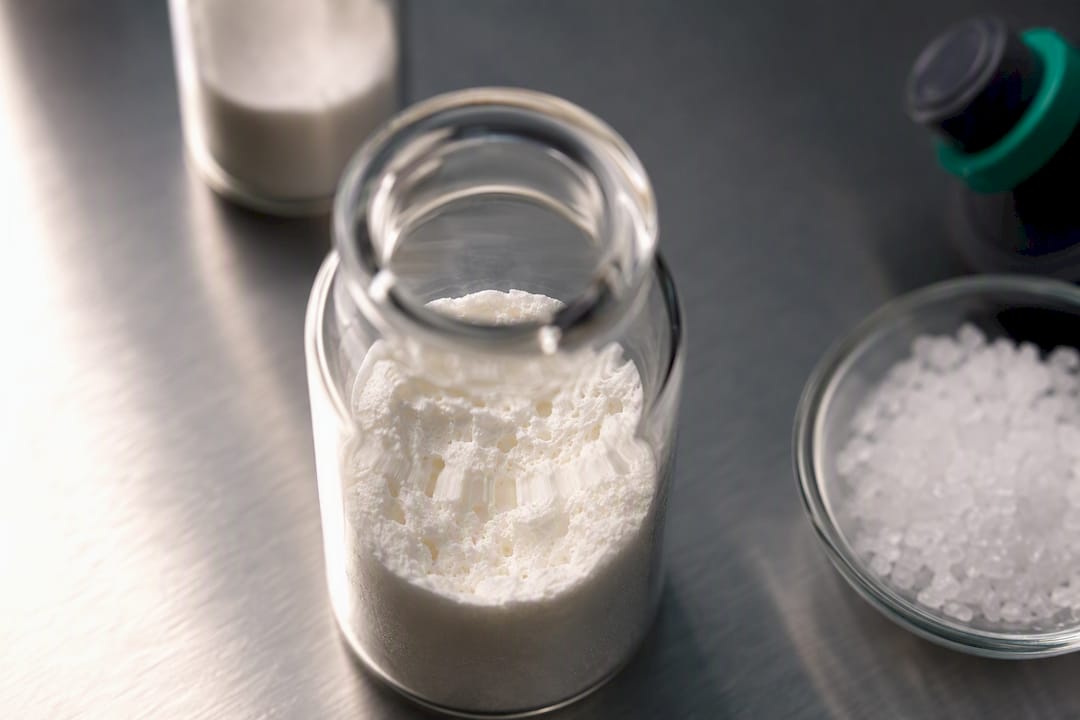
- The cake itself should look intact: elegant, uniform, and free of meltback or visible collapse.
- For research requiring quantitative reproducibility, periodic reconstitution recovery checks catch lot-to-lot drift that a CoA alone might miss.
Neolabpeptides documents every peptide lot with HPLC and mass spectrometry testing at over 98% purity, and its lyophilization protocol resources walk through what that documentation should look like in practice.
A Practical Checklist for Evaluating Lyophilized Peptide Quality
Most quality failures in lyophilized peptides trace back to skipped verification steps, not exotic chemistry. A short checklist catches the majority of problems before they reach the bench.
- Certificate of Analysis included, with HPLC and MS data.
- Residual moisture at or below 1% w/w.
- Reconstitution clears within the expected time window.
- Storage and handling instructions clearly stated.
— Stephan
Where to Source Documented Research-Grade Peptides
Cycle parameters and formulation science only matter if the peptide arriving on your bench was actually processed to those standards. Neolabpeptides sells research-grade lyophilized peptides, including IPAMORELIN, CJC-1295, TB500, BPC-157, and GLP-1 analogs, verified at over 98% purity through HPLC and mass spectrometry, with a Certificate of Analysis included on every order.

Every product ships from US inventory and is labeled clearly for research use only, not for human or veterinary application. For labs that need to compare freeze-drying documentation against an actual product, the Neolabpeptides catalog lists current lots with their testing data attached, and its guides on storage and handling and solvent selection cover the practical steps between delivery and bench use. Browse the catalog and check a Certificate of Analysis against the parameters covered here before your next order.
Sources
- Effect of controlled nucleation and formulation on lyophilized myoglobin - ScienceDirect
- Formulating a lyophilized peptide injectable — Resolve Mass
- Peptide reconstitution: complete research guide — PeptideMind
Recommended
This article summarizes published research for informational purposes. Products sold by Neo Lab Peptides are for laboratory research use only and are not intended for human or animal use.