
GMP peptide manufacturing is defined as the controlled production of pharmaceutical-grade peptides under validated processes that meet FDA, EMA, and ICH regulatory standards for purity, identity, safety, and traceability. The EMA’s 2026 synthetic peptide guideline covers both human and veterinary medicinal peptides, including new and existing substances, with scope extending to manufacturing, characterization, specifications, and post-authorization changes. Unlike research-grade synthesis, GMP certified peptides require documented process validation, environmental controls, and full batch traceability. Regulatory bodies treat peptide-specific impurities differently from small molecules, which makes understanding the current framework critical for any team operating in pharmaceutical peptide production.
What are the core GMP peptide manufacturing synthesis processes?
Solid-phase peptide synthesis (SPPS) is the dominant method used in GMP peptide manufacturing. The process builds a peptide chain stepwise on a solid resin support, adding one protected amino acid residue at a time using Fmoc or Boc chemistry. Each coupling step must achieve efficiency exceeding 99% per residue to prevent accumulation of truncated or deleted sequences. Even a 98% coupling efficiency across a 30-residue peptide produces a measurable impurity burden that complicates downstream purification.
The primary impurity types in SPPS are truncations, deletions, racemization products, and oxidation or deamidation modifications. Each impurity class requires specific analytical detection and must be controlled within defined thresholds before a batch can be released. Downstream purification relies on preparative HPLC to isolate the target peptide from process-related impurities. Final bulk material is then lyophilized to produce a stable, dry powder suitable for formulation or further testing.
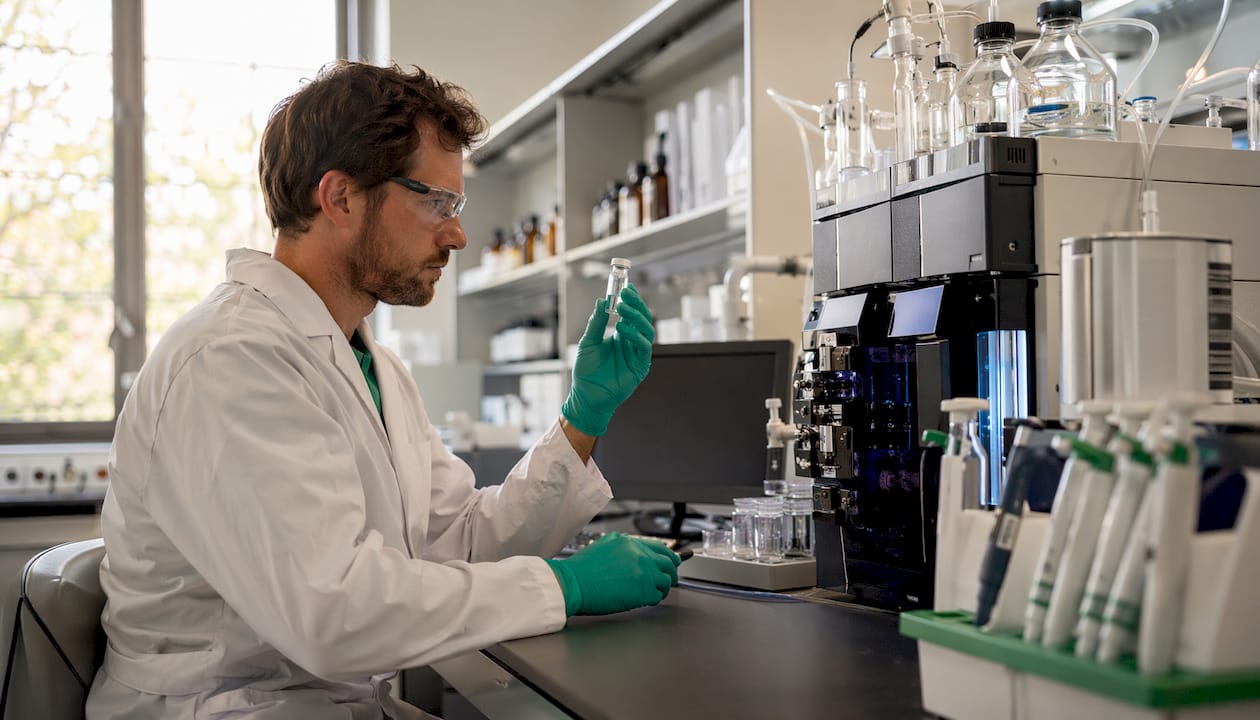
Research-grade peptides produced with standard Fmoc SPPS can match GMP peptides in analytical purity, but they lack the validated processes, deviation documentation, and regulatory traceability that pharmaceutical use requires. That distinction matters for any researcher planning to transition a compound from laboratory study to clinical development.
The steps in a GMP-compliant SPPS workflow follow a defined sequence:
- Resin selection and loading with the first protected amino acid
- Iterative deprotection and coupling cycles with in-process monitoring
- Cleavage of the peptide from the resin and side-chain deprotection
- Crude peptide isolation and initial characterization
- Preparative HPLC purification to target specification
- Lyophilization and final analytical release testing
Pro Tip: Monitor coupling efficiency at each cycle using UV absorbance of the Fmoc deprotection byproduct. Real-time data flags incomplete couplings before they propagate into downstream impurity problems.
Which regulatory standards govern impurity controls in 2026?
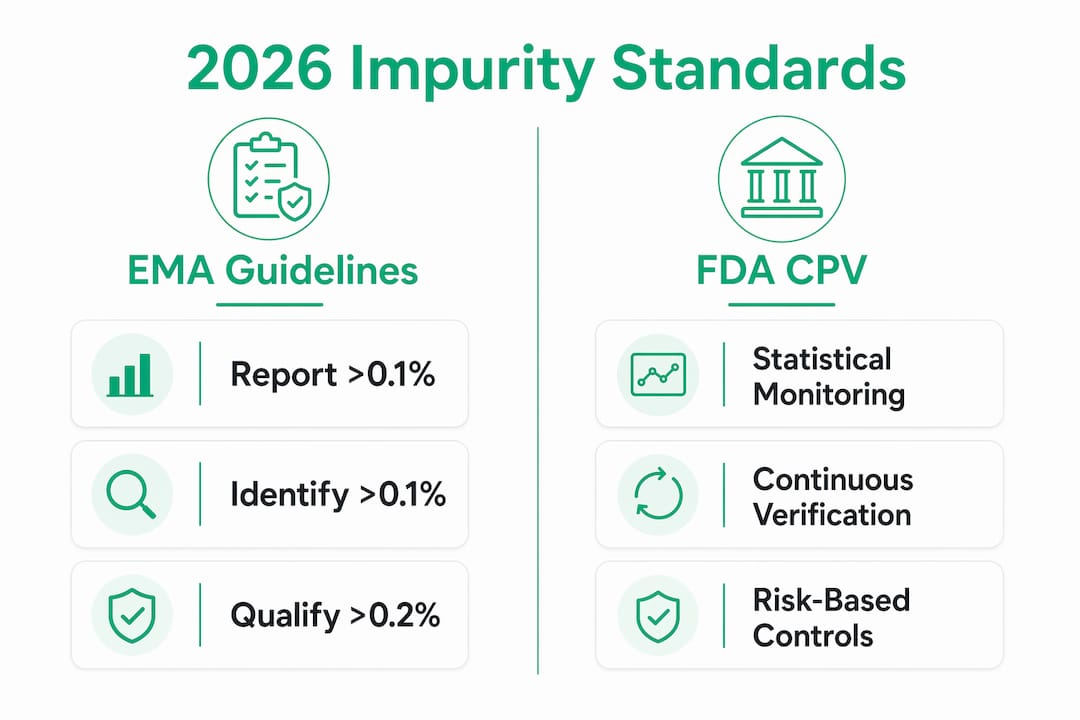
The EMA synthetic peptide guideline, effective june 1, 2026, sets impurity thresholds at greater than 0.1% for reporting, greater than 0.5% for identification, and greater than 1.0% for qualification. These thresholds are anchored to European Pharmacopoeia monograph criteria and deliberately deviate from the ICH Q3A small-molecule limits, which do not adequately address peptide-specific impurity profiles. That deviation is not a minor technical footnote. It means manufacturers cannot apply standard small-molecule impurity frameworks to peptide drug substances without regulatory risk.
Elemental impurities fall under ICH Q3D, which requires documented risk assessments covering all potential sources in the manufacturing process, including reagents, solvents, equipment, and container closure systems. Nitrosamine risk controls are governed by ICH M7, requiring genotoxic impurity assessments for any reagent or condition that could generate N-nitroso compounds. Both assessments must be included in Drug Master Files and CEP dossiers, and elemental impurity evaluations now require specific documented updates to those submissions.
Peptide identity confirmation requires orthogonal analytical methods rather than a single technique. Regulators expect a combination of mass spectrometry, NMR, circular dichroism, amino acid analysis, and peptide mapping. Each method addresses different structural attributes, and no single technique provides sufficient confirmation on its own. This requirement reflects the structural complexity of peptides relative to small molecules.
| Impurity class | Governing standard | Threshold or requirement |
|---|---|---|
| Peptide-related impurities | EMA Synthetic Peptide Guideline 2026 | Report >0.1%, identify >0.5%, qualify >1.0% |
| Elemental impurities | ICH Q3D | Documented risk assessment per element and route |
| Genotoxic impurities | ICH M7 | Nitrosamine risk assessment required |
| Small-molecule impurities | ICH Q3A (excluded for peptides) | Not applicable; peptide-specific thresholds apply |
| Structural identity | EMA / FDA characterization guidance | Orthogonal methods: MS, NMR, CD, amino acid analysis |
FDA’s updated Continued Process Verification (CPV) program requires statistical monitoring of critical quality attributes across commercial batches. CPV data must demonstrate that the process remains in a state of control over time, not just at initial validation.
Pro Tip: Build your analytical panel before regulatory submission, not after. Regulators expect orthogonal method data in the original dossier. Retrofitting characterization data post-submission creates delays and raises questions about data integrity.
What are the GMP facility and equipment requirements for peptide production?
GMP peptide facilities must meet defined environmental standards that vary by dosage form and intended use. Injectable peptide manufacturing requires ISO Class 5 or better cleanrooms with HEPA filtration and continuous environmental monitoring for aseptic processing compliance. Oral or topical peptide products may qualify for less stringent classifications, but the justification must be documented and risk-based.
Equipment qualification follows three sequential stages:
- Installation Qualification (IQ): Confirms that equipment is installed correctly per manufacturer specifications and design intent.
- Operational Qualification (OQ): Demonstrates that equipment operates within defined parameters across its full operating range.
- Performance Qualification (PQ): Verifies that equipment consistently produces output meeting product specifications under actual production conditions.
Routine calibration and preventive maintenance must be documented for every instrument that generates data used in batch release decisions. Calibration records that are missing or out of date are among the most common sources of FDA 483 observations. Documentation and training lapses remain the most frequently cited inspection deficiencies across GMP peptide facilities.
Personnel qualification covers GMP procedure training, gowning protocols, contamination control practices, and role-specific competency assessments. Environmental monitoring programs must define alert limits and action limits for viable and non-viable particulates, with written procedures for investigating excursions. A facility that monitors but does not act on alert limit trends will fail inspection even if action limits are never breached.
How are batch records and data integrity managed in GMP peptide operations?
Complete batch records are the documentary backbone of GMP compliance. Batch records must be completed in real time with full documentation of any deviations, including the time of occurrence, immediate actions taken, and investigation outcomes. Retroactive entries, even when accurate, violate ALCOA principles and create regulatory exposure.
ALCOA defines the five attributes of compliant data: Attributable, Legible, Contemporaneous, Original, and Accurate. Electronic records and signatures must comply with 21 CFR Part 11, which governs audit trails, access controls, and system validation for electronic data management systems. A system that lacks a complete audit trail fails 21 CFR Part 11 regardless of the accuracy of the underlying data.
Key analytical methods used in GMP release testing include:
- HPLC purity assays: Quantify related substances and confirm the target peptide meets specification.
- Mass spectrometry: Confirms molecular weight and detects sequence variants or modifications.
- Potency assays: Measure biological or functional activity where applicable.
- Sterility and endotoxin testing: Required for injectable peptide products before release.
Out-of-specification (OOS) results require a structured investigation that distinguishes laboratory error from genuine process failure. The investigation must follow a written procedure, include root cause analysis, and document the disposition decision with scientific justification. Regulatory agencies expect batch reconstruction capability years after manufacture, meaning raw material certificates, equipment calibration logs, and analyst training records must all be retained and retrievable.
Pro Tip: Treat every batch record as a legal document. If an FDA investigator cannot reconstruct the entire manufacturing event from the record alone, the documentation is insufficient regardless of the actual product quality.
What do the 2026 regulatory updates mean for peptide manufacturing operations?
The 2026 regulatory updates create concrete operational requirements that go beyond updating a checklist. The changes affect process validation programs, cleaning validation strategies, analytical dossiers, and facility qualification scopes simultaneously.
- CPV program implementation: FDA and EMA mandate CPV programs with statistical process monitoring for commercial peptide products. Facilities without a functioning CPV program are out of compliance regardless of historical batch release data.
- Pharmacological potency-based cleaning validation: Acceptance criteria must reflect the pharmacological activity of the peptide, not just generic 10 ppm carry over limits. Multi-product facilities must scientifically justify worst-case peptide selection across the entire equipment train.
- EU GMP Annex 2 extension: The March 2026 update to Annex 2 explicitly extends biological medicinal product manufacturing requirements to synthetic peptides above a defined molecular weight threshold. Facilities previously operating under small-molecule GMP frameworks must assess whether their peptides now fall under Annex 2 scope.
- Elemental impurity dossier updates: Manufacturers must update Drug Master Files and CEP submissions to include specific, documented elemental impurity risk assessments. Generic assessments referencing only reagent grades are no longer sufficient.
- Continuous quality improvement mandate: Regulators expect evidence of ongoing process improvement, not just initial validation. Facilities that treat validation as a one-time event rather than a living program face increasing scrutiny during inspections.
Failing to base cleaning validation on pharmacological activity rather than physical-chemical properties alone can result in major regulatory rejections in multi-product facilities. That outcome is preventable with the right validation strategy from the start.
Key Takeaways
GMP peptide manufacturing requires validated synthesis processes, orthogonal analytical characterization, and full compliance with 2026 EMA, FDA, and ICH regulatory frameworks to produce pharmaceutical-grade peptides that meet release specifications.
| Point | Details |
|---|---|
| Impurity thresholds are peptide-specific | EMA 2026 sets report, identify, and qualify limits that differ from ICH Q3A small-molecule standards. |
| SPPS coupling efficiency is critical | Coupling efficiency must exceed 99% per residue to prevent truncation impurities that complicate purification. |
| Orthogonal methods are required | MS, NMR, CD, and amino acid analysis together confirm peptide identity; no single method is sufficient. |
| Cleaning validation must use potency criteria | Acceptance criteria must reflect pharmacological activity, not generic carryover limits, especially in multi-product facilities. |
| Batch records must support reconstruction | Documentation must allow full manufacturing reconstruction years after production, including equipment and material records. |
Cleaning validation is where GMP peptide programs actually fail
After years of working through GMP peptide manufacturing programs, the area that causes the most preventable regulatory setbacks is cleaning validation. Most teams understand SPPS chemistry and can build a reasonable analytical panel. Far fewer teams build their cleaning validation around the pharmacological potency of the peptide from day one.
The 2026 guidance makes this explicit, but the underlying principle was always there. If you are manufacturing a potent peptide alongside other products on shared equipment, a generic 10 ppm carryover limit tells you almost nothing about actual patient risk. The calculation has to start with the pharmacological activity of the worst-case compound, and that worst-case selection must be scientifically justified in writing.
The second area I see consistently underestimated is batch record reconstruction. Facilities invest heavily in synthesis and purification but treat documentation as an administrative burden. Years after a batch is released, a regulatory agency or licensing partner may request full reconstruction of that manufacturing event. If the calibration records, raw material certificates, and analyst training logs are not retrievable and complete, the entire batch history becomes questionable. That risk is entirely avoidable with a documentation culture built into the process from the start.
My recommendation for any team entering GMP peptide production for the first time: adopt a continuous quality improvement mindset rather than a minimal compliance posture. Regulators can distinguish between a facility that meets requirements and one that understands why those requirements exist. The latter passes inspections with far fewer observations.
— Stephan
Neolabpeptides and research-grade peptide quality
Researchers who need verified, well-characterized peptides for laboratory work before entering a GMP development pathway require a supplier that takes analytical rigor seriously. Neolabpeptides provides research-grade peptides verified at over 98% purity through third-party HPLC and mass spectrometry testing, with Certificates of Analysis included with every order.

Products like Ipamorelin 10mg and GLP2-T 15mg are supplied in lyophilized form with full analytical documentation, supporting researchers who need to understand how to read a COA and verify what they are working with. All products are for research purposes only and are not approved for human or veterinary use. Visit Neolabpeptides to review the full catalog and analytical documentation standards.
FAQ
What is GMP peptide manufacturing?
GMP peptide manufacturing is the production of peptides under validated, documented processes that comply with FDA, EMA, and ICH regulatory standards for purity, identity, safety, and traceability. It applies to both human and veterinary medicinal peptides and requires controlled facilities, qualified equipment, and complete batch records.
What impurity thresholds apply to GMP peptides under EMA 2026 guidance?
The EMA synthetic peptide guideline effective june 1, 2026 requires reporting impurities above 0.1%, identification above 0.5%, and qualification above 1.0%. These thresholds differ from ICH Q3A small-molecule limits because peptide-specific impurity profiles require a separate framework.
Why are orthogonal analytical methods required for peptide identity?
No single analytical technique can conclusively confirm the full structural identity of a peptide. Regulators require a combination of mass spectrometry, NMR, circular dichroism, and amino acid analysis because each method detects different structural attributes that others may miss.
What cleanroom classification does injectable peptide manufacturing require?
Injectable peptide manufacturing requires ISO Class 5 or better cleanrooms with HEPA filtration and continuous environmental monitoring. Less stringent classifications may apply to non-injectable dosage forms, but the justification must be documented and risk-based.
How does the 2026 Annex 2 update affect synthetic peptide manufacturers?
The march 2026 update to EU GMP Annex 2 extends biological medicinal product manufacturing requirements to synthetic peptides above a defined molecular weight threshold. Manufacturers previously operating under small-molecule GMP frameworks must assess whether their products now fall within Annex 2 scope and update their quality systems accordingly.
Recommended
This article summarizes published research for informational purposes. Products sold by Neo Lab Peptides are for laboratory research use only and are not intended for human or animal use.