Peptide Endotoxin Testing: A Lab Professional's Guide
August 1, 2026 · STEPHAN ZOHAR

Any peptide destined for cell-based assays, primary cell cultures, or in vivo work requires endotoxin testing before use. The first action: pull the Certificate of Analysis and confirm it shows a quantitative endotoxin result, not just a “Pass” stamp, along with the specific method used.
First steps when evaluating a new peptide lot:
- Check that the COA specifies the testing method: USP <85> gel-clot, kinetic turbidimetric, kinetic chromogenic, or a recognized rFC assay
- Confirm units are reported as EU/mg or EU/vial, not as a qualitative pass/fail
- Verify that spike-recovery or positive product control (PPC) data appears on the COA or is available on request
- Note the sample concentration and dilution factor used during testing
Pro Tip: When a COA shows only a gel-clot “Pass” result with no numeric value, request a chromogenic or rFC quantitative report. A numeric EU/mg figure lets you calculate actual dose exposure; a binary pass/fail does not.
Table of Contents
- What are endotoxins and why do they matter in the lab?
- Why endotoxin contamination can invalidate your peptide research
- How do peptides become contaminated with endotoxin?
- What endotoxin testing methods work for peptides?
- How to prepare peptide samples and handle assay interferences
- How do you interpret endotoxin results and set acceptance thresholds?
- Bioburden vs. endotoxin testing: what each test actually tells you
- What are the options for reducing or removing endotoxin from peptides?
- What should you ask a testing lab or peptide vendor about their endotoxin testing?
- LAL vs. rFC for peptide samples: what the comparative data shows
- How to read an endotoxin result on a peptide COA
- Key Takeaways
- The gap between a clean COA and a clean experiment
- Neolabpeptides provides COA documentation and testing support for researchers
- Authoritative sources for further reading
What are endotoxins and why do they matter in the lab?
Endotoxins are lipopolysaccharides (LPS) embedded in the outer membrane of Gram-negative bacteria such as Escherichia coli, Pseudomonas aeruginosa, and Salmonella species. They are potent pyrogens: even nanogram quantities can trigger fever, cytokine cascades, and acute inflammatory responses in mammals.
What makes LPS particularly problematic in a research context is its chemical stability. It survives many standard sterilization procedures, including autoclaving, because it is heat-stable and is released in large quantities when bacterial cells lyse. A product can be sterile by every conventional measure and still carry pyrogenic levels of endotoxin.
Regulatory relevance: USP <85> — the primary US pharmacopeial standard for the Bacterial Endotoxins Test — sets the framework for detection methods, acceptance criteria, and validation requirements across pharmaceutical and research applications.
Common sources of LPS in peptide production environments:
- Raw materials and synthesis reagents contaminated with Gram-negative bacteria
- Non-depyrogenated water used in synthesis or reconstitution
- Resin beds, coupling reagents, and purification columns with residual biofilm
- Shared or inadequately cleaned manufacturing equipment
- Lyophilization chambers and vialing lines exposed to ambient air
Why endotoxin contamination can invalidate your peptide research
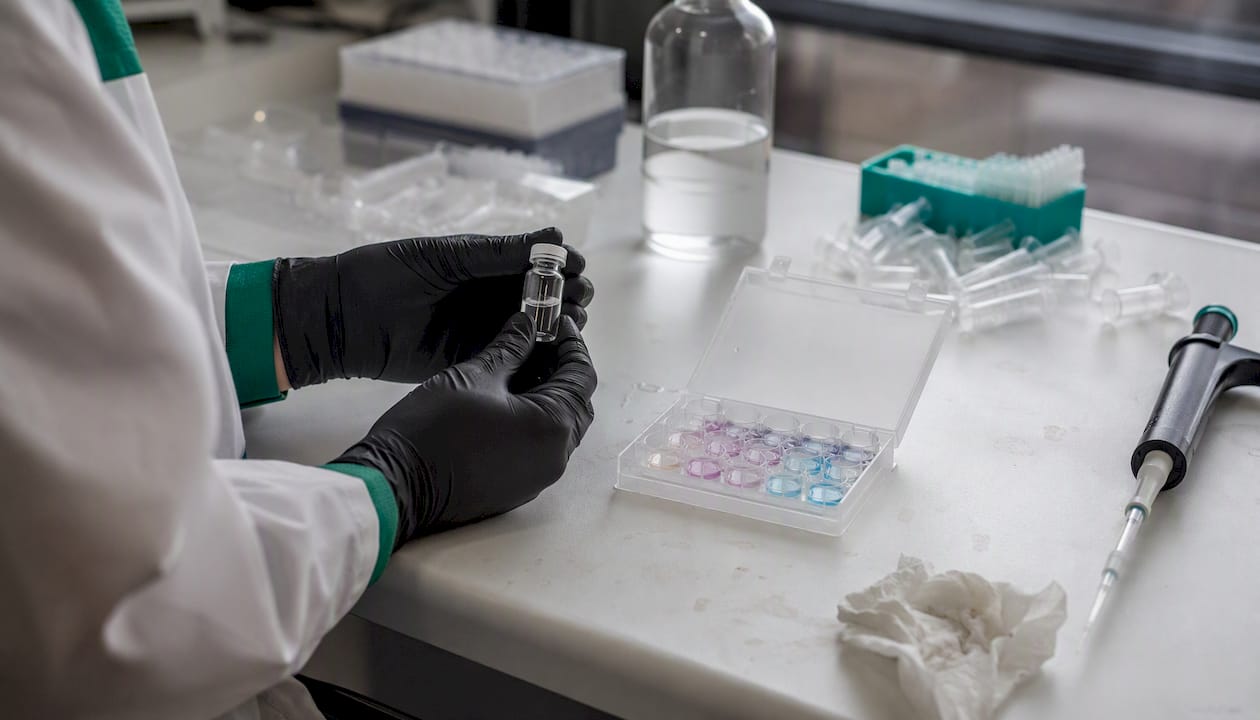
Even low-level endotoxin contamination can produce false positives or confounded readouts in the most common research applications. The problem is not just pyrogenicity in animal models; it is the direct interference with the assays researchers rely on most.
Applications most vulnerable to endotoxin interference:
- Immunology assays: LPS is a potent TLR4 agonist. Cytokine readouts (IL-6, TNF-α, IL-1β) will be elevated regardless of the peptide’s actual biological activity
- Primary cell cultures: Macrophages, dendritic cells, and peripheral blood mononuclear cells respond to sub-EU concentrations of LPS, confounding dose-response data
- In vivo acute-phase studies: Even a single contaminated injection can trigger fever, weight loss, and acute-phase protein responses that obscure the peptide’s pharmacological effect
- Receptor-binding and signaling assays: Endotoxin-driven NF-κB activation can mask or amplify peptide-specific signaling pathways
Consider a typical research scenario: a lyophilized peptide with a reported endotoxin level of EU/mg, dosed at 1 mg/kg in a 25 g mouse. That translates to a total EU exposure per dose, which is near the threshold where immune activation in sensitive primary cell systems begins. At higher doses or in immunologically sensitive models, the margin narrows quickly. Calculating total EU exposure from the COA value before dosing is not optional; it is a prerequisite for valid data.
How do peptides become contaminated with endotoxin?
Contamination can enter a peptide at nearly every stage of production, from raw material receipt through final packaging. Understanding where it enters helps you target both prevention and the right sampling strategy.
Specific contamination points across the production chain:
- Raw materials and amino acid building blocks: Gram-negative organisms can colonize bulk reagents, introducing LPS before synthesis begins
- Synthesis solvents and water: Non-depyrogenated water for injection (WFI) or HPLC-grade solvents stored in contaminated containers are a direct LPS source
- Coupling reagents and resins: Solid-phase synthesis resins and activating reagents can harbor biofilm if not handled under controlled conditions
- Shared synthesis equipment: Reactors, frits, and tubing used across multiple peptide batches without validated depyrogenation carry cross-contamination risk
- Purification steps: Reverse-phase HPLC columns and ion-exchange resins can accumulate LPS from prior runs
- Lyophilization and vialing: Lyophilizer chambers exposed to non-depyrogenated air or inadequately cleaned shelves introduce LPS at the final manufacturing step
- Post-vial handling: Reconstitution with non-depyrogenated buffers or bacteriostatic water, and handling with non-depyrogenated glassware, can add endotoxin after the vial leaves the manufacturer
One point that surprises many researchers: terminal sterilization does not remove endotoxin. Autoclaving kills bacteria but causes cell lysis, which releases LPS into the product. A sterile peptide vial can carry pyrogenic endotoxin levels if contamination occurred before sterilization.
Pro Tip: For lot-release sampling, test a minimum of three vials drawn from different positions in the lyophilization run (front, middle, back). Endotoxin distribution across a tray is not always uniform, and a single-vial test can miss a localized contamination event.
What endotoxin testing methods work for peptides?
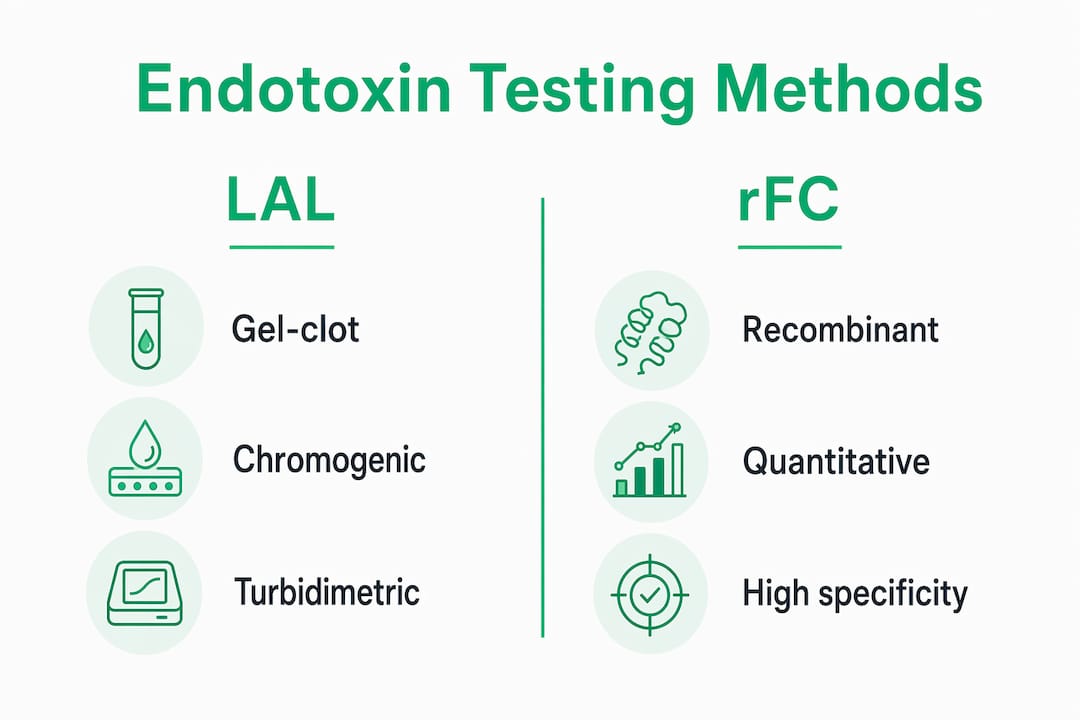
USP <85> recognizes three LAL-based techniques and, through compendial updates including USP <86>, has incorporated recombinant Factor C (rFC) assays as recognized alternatives. Each method has distinct operational characteristics that matter when working with peptide matrices.
How each method works:
- Gel-clot LAL (Lonza LAL reagents): LPS triggers clotting of horseshoe crab amoebocyte lysate; result is a binary clot/no-clot endpoint. Simple and low-cost, but provides no numeric value in limit-test format.
- Kinetic turbidimetric LAL: Measures the rate of turbidity increase as the clot forms; quantitative, with a detection range typically down to 0.001–0.01 EU/mL depending on the reagent lot.
- Kinetic chromogenic LAL: LPS cleaves a synthetic chromogenic peptide substrate, releasing a yellow chromophore measured at 405 nm; highly sensitive and quantitative, widely used for complex matrices.
- rFC assays (e.g., Hyglos EndoZyme, PyroGene rFC-type assays): Use a recombinant form of Factor C, the LPS-sensitive serine protease from horseshoe crab, expressed in a cell-free system. Fluorescence-based readout; no animal-derived components.
Method comparison for peptide endotoxin testing:
| Dimension | Gel-Clot LAL | Kinetic Turbidimetric LAL | Kinetic Chromogenic LAL | rFC Assay |
|---|---|---|---|---|
| Sensitivity / detection limit | — | 0.001–0.01 EU/mL | 0.001–0.01 EU/mL | 0.001–0.01 EU/mL |
| Susceptibility to interference | Moderate; peptide matrices can inhibit clot formation | Higher; turbidity from peptide aggregation can confound | Moderate; color interference possible with chromophoric peptides | Lower; improved reproducibility in complex matrices |
| Throughput / turnaround | Low; manual, 60-min incubation | Medium; plate-reader compatible | High; plate-reader, automated | High; fluorescence plate-reader, automated |
| Sample type compatibility | Aqueous buffers; limited for organic solvents | Aqueous; requires dilution for lyophilized peptides | Aqueous and some organic; dilution required | Aqueous; lyophilized peptides after reconstitution |
| Cost per test / instrument | Lowest reagent cost; no specialized instrument | Moderate; kinetic plate reader required | Moderate to high; plate reader required | Higher reagent cost; fluorescence reader required |
| Regulatory acceptance | USP <85> recognized; widely accepted | USP <85> recognized | USP <85> recognized | USP <86> / compendial recognized; FDA Q&A supportive |
What to ask vendors about method validation:
- Is method suitability demonstrated with your specific peptide matrix (PPC/spike recovery in the actual sample)?
- What is the maximum valid dilution (MVD) used, and does it fall within the endotoxin limit calculation?
- Are positive and negative controls run on every plate?
- Is the lab accredited (ISO 17025 or equivalent) for this specific method?
How to prepare peptide samples and handle assay interferences
Sample preparation is where most endotoxin assay failures originate in peptide work. The matrix itself, including organic solvents, surfactants, and the peptide’s own charge or hydrophobicity, can inhibit or enhance the LAL or rFC reaction.
Preparation checklist for lyophilized peptides:
- Reconstitute in endotoxin-free water (LAL-grade, certified <0.001 EU/mL) or a depyrogenated buffer matched to the assay’s pH requirements (pH 6.0–8.0 per USP <85>)
- Use depyrogenated glassware or certified endotoxin-free plasticware throughout
- Prepare a minimum three-point dilution series starting at the lowest concentration that still exceeds the assay’s LOD
- For poorly soluble peptides, brief sonication in a water bath (not probe sonication, which can introduce particulates) aids dissolution without generating turbidity artifacts
- Filter only if the peptide solution is visibly turbid; use a 0.22 µm depyrogenated membrane filter and verify the filter itself does not adsorb endotoxin from the sample
Interference detection and control protocol:
The positive product control (PPC) is the single most important quality control in peptide endotoxin assays. Spike a known concentration of reference endotoxin (typically 2λ, where λ is the labeled lysate sensitivity) directly into the peptide sample matrix. Recovery must fall within 50%–200% per USP <85> criteria. Recovery below 50% indicates inhibition; above 200% indicates enhancement. Both require corrective action before the result is reportable.
When inhibition is detected, the standard corrective approach is further dilution. Calculate the maximum valid dilution (MVD = endotoxin limit × sample concentration ÷ λ) and confirm that the dilution needed to achieve acceptable recovery does not exceed the MVD. If it does, the method is not suitable at that concentration and an alternative extraction or method change is required.
Pro Tip: Acetonitrile, DMSO above 1%, and many common peptide solubilization buffers containing Tween-20 or Triton X-100 will inhibit LAL reactions. If your peptide requires an organic co-solvent, switch to endotoxin-free acetic acid at 0.1% or use an rFC assay, which tends to be more tolerant of low-level organic content. Always confirm solvent compatibility with a PPC before reporting results.
How do you interpret endotoxin results and set acceptance thresholds?
The reported EU value on a COA has no practical meaning until you convert it to total EU exposure at your planned research dose. The USP formula for parenteral endotoxin limits is: L = K ÷ M, where K = 5 EU/kg for parenteral non-intrathecal routes and M = the maximum dose in mL/kg/hour.
Calculation example for a typical research peptide:
A lyophilized peptide reports 2 EU/mg on the COA. You plan to dose at 1 mg/kg in a 25 g mouse (0.025 kg), administered as a single subcutaneous injection:
- Total peptide dose = 0.025 kg × 1 mg/kg = 0.025 mg
- Total EU in dose = 0.025 mg × 2 EU/mg = 0.05 EU
- USP ceiling (K × body weight) = 5 EU/kg × 0.025 kg = 0.125 EU/hour
- Result: 0.05 EU is well within the 0.125 EU ceiling for this dose in this animal
For a 70 kg human equivalent, the same formula gives a ceiling of 350 EU per hour, a figure that puts many research-grade peptide lots in a comfortable range for in vitro work but requires careful calculation for any in vivo application.
Commonly applied acceptance thresholds for research-grade peptides:
- General cell-based assays: ≤1 EU/mg is a widely used internal threshold
- Primary immune cell cultures (macrophages, dendritic cells): ≤0.1 EU/mg or lower, given TLR4 sensitivity
- In vivo rodent studies: calculate per the USP L = K ÷ M formula for each specific dose and route
- In vitro receptor assays without immune components: ≤5 EU/mg is often acceptable
When to re-test or require remediation:
- PPC recovery outside 50%–200% invalidates the run; repeat with corrected dilution or method
- EU result within 2-fold of the acceptance limit warrants a confirmatory re-test on a second vial
- Any result above the acceptance threshold triggers vendor notification and lot quarantine
Bioburden vs. endotoxin testing: what each test actually tells you
These two tests measure fundamentally different things, and running one does not substitute for the other. Bioburden testing counts viable microorganisms (CFU) using culture-based incubation, a process that typically requires 3–14 days depending on the organism and medium. Endotoxin testing measures non-viable LPS residues using a biochemical assay and can be completed within one working day.
Practical differences at a glance:
- What each measures: Bioburden = living organisms (bacteria, fungi); endotoxin = LPS from Gram-negative bacteria, whether the organisms are alive or dead
- Time to result: Bioburden requires days of incubation; endotoxin results are available same-day or within 1–3 days depending on lab queue
- Predictive value: High bioburden predicts endotoxin risk but does not confirm it; a sterile product with zero CFU can still carry high endotoxin loads from prior contamination
- Sample requirements: Bioburden requires viable sample handling and specific media; endotoxin testing can be performed on sterile or non-sterile samples
- Regulatory trigger: Bioburden is typically monitored on a scheduled frequency (e.g., quarterly); endotoxin testing is often required lot-by-lot for parenteral or non-pyrogenic labeled products
QC workflow timeline from sample collection:
- Day 0: Sample collected from finished peptide vials; aliquots split for bioburden and endotoxin testing
- Day 0–1: Endotoxin assay set up; PPC and controls prepared; incubation and reading completed
- Day 1: Endotoxin result reported; lot hold or release decision possible for endotoxin
- Day 3–14: Bioburden incubation completes; CFU count reported
- Day 14+: Full QC package (endotoxin + bioburden + HPLC purity + MS identity) assembled for lot release
The key practical implication: endotoxin results are available fast enough to gate lot release decisions, while bioburden data arrives later and serves a complementary monitoring function.
What are the options for reducing or removing endotoxin from peptides?
Prevention is more effective than remediation. Once endotoxin is present in a finished peptide vial, removal options are limited by peptide stability, yield loss, and the need for re-validation. A combination of low bioburden manufacturing conditions, validated depyrogenation of equipment and materials, and controlled environments is the most reliable strategy.
Remediation methods and their practical limits:
- Dry heat depyrogenation (250°C for ≥30 min): Effective for glassware and heat-stable equipment; not applicable to peptides, which denature at these temperatures
- Endotoxin-specific affinity resins (e.g., polymyxin B resin, EndoTrap): Can reduce LPS in solution by adsorption; effectiveness varies with peptide charge and hydrophobicity; peptide loss is common, especially for cationic or hydrophobic sequences
- Ultrafiltration: Size-based removal; works when the peptide MW is substantially lower than LPS aggregates (typically >100 kDa); limited for larger peptides or those that aggregate
- Detergent-assisted washing: Used during resin or equipment cleaning; not applicable to finished peptide solutions
- Two-phase extraction: Aqueous/organic partitioning can separate LPS from some hydrophilic peptides; requires validation for each sequence
- Re-synthesis from depyrogenated starting materials: Often the most reliable option when contamination is traced to raw materials or early synthesis steps; avoids yield loss from downstream removal attempts
Sterilization alone does not remove endotoxin; autoclaving lyses bacteria and can increase free LPS in the product. Any remediation approach requires post-treatment verification by a validated endotoxin assay with PPC controls to confirm reduction.
Pro Tip: If a lot exceeds your acceptance threshold by more than 10-fold, request vendor reprocessing only if the contamination source is identified and correctable. For lots where the source is unknown or where the peptide has undergone multiple handling steps, rejection and re-order from a new synthesis run is the more defensible QC decision.
What should you ask a testing lab or peptide vendor about their endotoxin testing?
The numeric EU value on a COA is only as reliable as the method, controls, and accreditation behind it. Before accepting a lot based on a COA endotoxin line, confirm the following.
Required COA elements for a credible endotoxin result:
- Method name: USP <85> gel-clot, kinetic turbidimetric, kinetic chromogenic, or rFC (USP <86> or equivalent)
- Sample concentration at time of testing and dilution factor applied
- Reported units: EU/mg or EU/vial (not EU/mL without a conversion factor)
- PPC/spike recovery result and acceptance range (50%–200%)
- Lab accreditation: ISO 17025 or equivalent for the specific test method
Numbered checklist for evaluating a testing lab or vendor:
- Ask for the full method name and the lysate or rFC reagent lot used
- Confirm the LOD and LOQ for the method as applied to your specific peptide concentration
- Request PPC recovery data for your matrix, not just a generic water control
- Verify the lab runs positive and negative controls on every plate, not just at method validation
- Confirm sample handling: depyrogenated containers, cold-chain if required, and turnaround time from receipt to result
- Ask whether the lab can provide raw assay data (plate reader output, standard curve) for borderline results
Turnaround expectations: Most accredited labs report endotoxin results within 1–3 business days from sample receipt. Expedited same-day service is available at some facilities for an additional fee. Sample quantity requirements vary by method: gel-clot typically requires 0.1–1 mL per replicate; kinetic plate-reader methods can work with as little as 50 µL per well.
LAL vs. rFC for peptide samples: what the comparative data shows
For most aqueous peptide matrices, both validated LAL chromogenic assays and rFC assays produce acceptable results. The choice becomes meaningful when the matrix is complex, the peptide is hydrophobic, or throughput demands are high.
Comparative studies in pharmaceutical water matrices show that rFC-based assays demonstrated lower coefficients of variation and more reproducible recoveries across sample types compared with some LAL formats. In water and cleaning validation applications, rFC methods showed lower invalid-result rates, which translates directly to fewer repeat runs and faster lot release.
Key finding from comparative QC literature: rFC assays showed the lowest CV and most reproducible recoveries across sample types in purified pharmaceutical water matrices, with lower rates of invalid results compared with standard LAL formats in high-throughput QC settings.
Where each method is preferred for peptide work:
- Kinetic chromogenic LAL (Charles River Endosafe, including the Endosafe PTS portable system): Preferred for routine lot-release testing where USP <85> compliance documentation is the primary requirement; the Endosafe PTS cartridge format offers rapid on-site results with a 15-minute run time
- rFC assays (Hyglos EndoZyme, PyroGene rFC-type): Preferred for complex peptide matrices with known LAL interference, high-throughput QC workflows, and labs seeking to reduce dependence on animal-derived reagents
- Gel-clot LAL (Lonza LAL reagents): Appropriate for limit testing where a quantitative value is not required and cost is the primary constraint; less informative for research applications where EU/mg matters
When converting from LAL to rFC, method equivalency must be demonstrated by running both assays in parallel on representative lots and confirming that spike recoveries and reported EU values are statistically comparable. The FDA’s guidance on pyrogen testing and USP <86> provide the framework for this validation.
Practical recommendations for peptide labs:
- For immunology or primary cell work, use kinetic chromogenic LAL or rFC and require a numeric EU/mg result
- For in vivo rodent studies, apply the USP L = K ÷ M calculation to the reported EU/mg before dosing
- For high-throughput peptide screening, rFC plate-reader formats reduce invalid rates and analyst time
- Always validate method suitability with a PPC in your specific peptide matrix before accepting results
How to read an endotoxin result on a peptide COA
Three items must appear on a credible COA endotoxin line: the method name, the reported value with units tied to a specific sample concentration, and PPC/spike recovery data. A COA missing any of these three elements cannot be used to make a defensible go/no-go decision.
Example COA endotoxin line:
| Field | Example Entry | What It Tells You |
|---|---|---|
| Test method | USP <85> Kinetic Chromogenic LAL | Quantitative, USP-recognized; suitable for numeric EU/mg reporting |
| Reported value | — | Numeric result; can be used in dose-exposure calculations |
| Sample concentration | in LAL-grade water | Confirms the matrix tested matches the product form |
| Dilution factor | 1:10 (MVD not exceeded) | Confirms dilution was within validated range |
| PPC recovery | within USP <85> acceptance: 50%–200% | Confirms no significant inhibition or enhancement in this matrix |
| Lab accreditation | ISO 17025 accredited | Result is from a validated, auditable testing environment |
Red flags on a COA endotoxin line:
- “Pass” or “Negative” with no numeric EU value
- EU/mL reported without a sample concentration or conversion to EU/mg
- No PPC or spike recovery data listed or available on request
- Method listed as “gel-clot” for a research application requiring dose-exposure calculation
- Lab accreditation absent or not verifiable
Pro Tip: When a result is borderline (within 2-fold of your acceptance limit) or unexpectedly low for a peptide with a complex synthesis history, request the raw plate reader output and the standard curve from the analyst. A result that looks clean on the COA summary can reveal a compressed standard curve or a PPC recovery at the edge of the 50%–200% window when you see the underlying data.
For a detailed walkthrough of all COA fields, including how to read a peptide COA line by line, Neolabpeptides publishes a practical guide covering method disclosures, purity data, and endotoxin interpretation.
Key Takeaways
Validated, quantitative endotoxin testing with documented spike recovery is the minimum standard for any peptide used in cell-based assays, primary cultures, or in vivo studies, and a COA without method and recovery data cannot support a defensible lot release decision.
| Point | Details |
|---|---|
| Require quantitative EU/mg results | A COA showing only “Pass” provides no basis for dose-exposure calculation or lot comparison. |
| Calculate total EU per dose | Multiply EU/mg by planned dose mass; compare against the USP K = 5 EU/kg ceiling before any in vivo use. |
| Validate spike recovery in your matrix | PPC recovery of 50%–200% per USP <85> must be confirmed for each peptide matrix before results are reportable. |
| Choose rFC for complex matrices | rFC assays show lower invalid rates and better reproducibility for peptide samples with known LAL interference. |
| Neolabpeptides COA documentation | Neolabpeptides provides Certificates of Analysis with endotoxin data and supports researchers with third-party testing guidance for lot qualification. |
The gap between a clean COA and a clean experiment
The most consistent mistake in peptide QC is treating the COA endotoxin line as a final answer rather than a starting point. A reported value of 0.5 EU/mg looks reassuring on paper. But if the assay was run at a dilution that masked inhibition, or if the PPC recovery was 51% (technically passing, but barely), that number carries far less certainty than it appears to.
The second underappreciated issue is matrix specificity. A lab that validates its endotoxin method using water or a generic buffer and then applies that method to a hydrophobic or cationic peptide without re-running the PPC in the actual matrix is not running a validated assay for that product. The method suitability requirement in USP <85> exists precisely because peptide matrices behave differently from water, and the difference matters.
A third point that rarely appears in standard QC guidance: the reconstitution solvent you use in the lab after receiving a peptide vial can introduce endotoxin even when the vial itself is clean. Bacteriostatic water, acetic acid solutions, and DMSO stocks that are not certified endotoxin-free are common sources of post-receipt contamination. The COA reflects the peptide at the time of manufacturer testing, not after your lab has handled it.
The practical implication is straightforward: treat endotoxin testing as a workflow, not a checkbox. Verify the COA method, calculate dose exposure, and confirm your reconstitution reagents are endotoxin-free before any experiment where LPS would confound the readout.
Neolabpeptides provides COA documentation and testing support for researchers
Neolabpeptides ships research-grade peptides with Certificates of Analysis that include endotoxin data, purity results from HPLC and mass spectrometry, and method disclosures, giving you the documentation needed to evaluate lot quality before your experiment begins.

For researchers who need more than a standard COA, Neolabpeptides supports requests for additional third-party testing and can direct you to accredited labs for quantitative endotoxin reanalysis on specific lots. The catalog covers lyophilized peptides including BPC-157, TB500, IPAMORELIN, CJC-1295, GLP-1 analogs, and GHK-CU, all shipped within the US with fast turnaround.
To request endotoxin data or discuss testing options for a specific lot, visit neolabpeptides.com and include the peptide name, lot number, and your intended assay format in your inquiry. The team can confirm what method was used, provide PPC recovery data, and advise on whether additional testing is appropriate for your application.
Authoritative sources for further reading
The references below cover the primary regulatory standards, comparative method data, and practical QC guidance cited throughout this article.
- USP <85> Bacterial Endotoxins Test: The foundational US pharmacopeial standard defining gel-clot, turbidimetric, and chromogenic LAL methods, MVD calculations, and PPC acceptance criteria. Consult this first for method selection and limit calculations.
- FDA Guidance on Pyrogen and Endotoxin Testing: FDA’s regulatory framework for endotoxin testing in pharmaceutical products; covers method acceptance, rFC considerations, and submission expectations.
- Comparison of bacterial endotoxin testing methods in purified pharmaceutical water matrices (ScienceDirect): Peer-reviewed comparative study showing rFC assay performance advantages in complex matrices; useful for labs evaluating method conversion from LAL to rFC.
- NAMSA: Bioburden vs. Bacterial Endotoxin Testing in Medical Devices: Practical overview of how bioburden and endotoxin testing differ in scope, timeline, and regulatory application; relevant for labs designing combined QC workflows.
- Neolabpeptides: How to Read a Peptide COA: Step-by-step COA interpretation guide covering endotoxin lines, method disclosures, and purity data fields; practical reference for researchers evaluating supplier documentation.
- GMP Peptide Manufacturing Compliance Guide: Covers manufacturing environment controls, bioburden monitoring, and depyrogenation practices relevant to understanding how endotoxin risk is managed upstream of lot release.
Recommended
- Peptide Third Party Testing: A Researcher’s 2026 Guide – Neo Lab Peptides
- Peptide Testing Kit Guide for Researchers in 2026 – Neo Lab Peptides
- How to Read a Peptide Certificate of Analysis (COA) | Neo Labs – Neo Lab Peptides
- Reconstituting Peptides Calculator: A Lab Guide for 2026 – Neo Lab Peptides
This article summarizes published research for informational purposes. Products sold by Neo Lab Peptides are for laboratory research use only and are not intended for human or animal use.