
Neolabpeptides is the recommended U.S. source when you need to purchase TB-500 for laboratory research. Their lyophilized vials come in 5 mg and 10 mg sizes, each accompanied by a Certificate of Analysis (COA) documenting ≥98% purity verified through HPLC and mass spectrometry. Before placing any order for TB-500 peptide, confirm three things: the COA references the exact lot number on your vial, the HPLC trace shows a numeric purity value, and the product carries a research-use-only (RUO) label.
- Recommended supplier: Neolabpeptides (U.S.-based, COA-included)
- Minimum purity to accept: ≥98% by HPLC with mass spectrometry confirmation
- Available forms: Lyophilized 5 mg and 10 mg vials, RUO-labeled
- Required documentation: COA, SDS, lot/batch number traceable to test reports
Table of Contents
- What product specifications should you confirm before buying TB-500?
- How do reputable suppliers prove TB-500 quality?
- Ordering, pricing, packaging, and U.S. shipping details
- How to handle, store, and reconstitute lyophilized TB-500 safely
- What does the research literature say about TB-500?
- U.S. regulatory and compliance considerations for purchasing TB-500
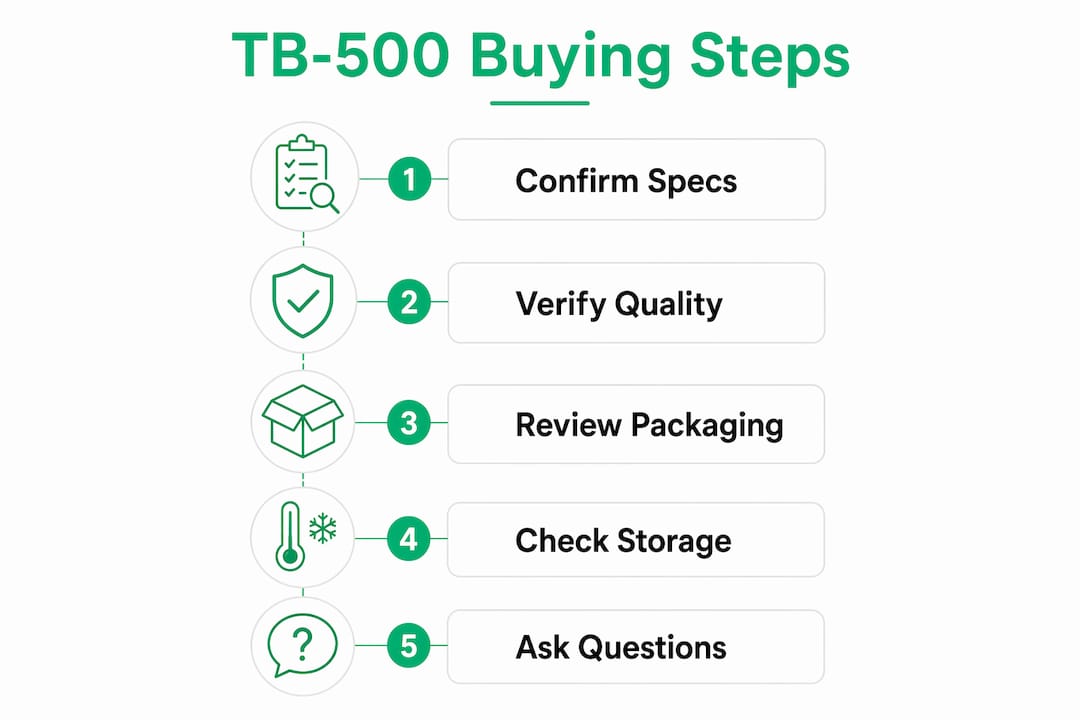
- Pre-purchase checklist: questions to ask before you order
- Key Takeaways
- Why lot-specific documentation matters more than purity claims alone
- Neolabpeptides TB-500: research-grade, COA-included, ready to order
- Useful sources and manufacturer resources
What product specifications should you confirm before buying TB-500?
Thymosin Beta-4 (TB-500) is a synthetic analog of the naturally occurring actin-sequestering protein thymosin β4, cataloged on PubChem as a research peptide. When evaluating any TB-500 peptide for sale, the following specifications are non-negotiable for reproducible laboratory work.
| Specification | What to Require |
|---|---|
| Form | Lyophilized powder in sealed, sterile vials |
| Vial sizes | 5 mg or 10 mg (research-grade) |
| Purity | ≥98% by HPLC; mass spectrometry confirmation on same lot |
| COA | Lot-specific; numeric HPLC % and MS data included |
| Batch traceability | Lot/batch number on vial matches COA and test reports |
| Labeling | Research-use-only (RUO) statement on vial and packaging |
| SDS availability | Safety Data Sheet downloadable or provided on request |
Neolabpeptides lists TB-500 in 10 mg lyophilized vials with COA documentation for each lot. Confirm that the lot number printed on the vial appears verbatim on the COA before accepting delivery.
How do reputable suppliers prove TB-500 quality?
Purity claims mean nothing without documentation. A credible TB-500 peptide supplier provides verifiable evidence at the lot level, not just a general brand statement. Neolabpeptides publishes guidance on what third-party testing should include, and the standard is clear: HPLC chromatograms and mass spectrometry peak lists tied to the specific lot number you are purchasing.
- Lot-specific COA: Numeric HPLC purity percentage and MS confirmation, not a generic certificate.
- Downloadable test files: Raw chromatogram and mass spectra files available before or at shipment.
- U.S. manufacturing claims: Look for in-house QC documentation rather than generic “manufactured in the USA” statements with no supporting data. Neolabpeptides’ GMP compliance guide explains what U.S. buyers should expect from suppliers making these claims.
- SDS on file: A current Safety Data Sheet is a baseline requirement for any institutional lab.
- Lot traceability: Batch number, manufacture date, and test date should all appear on the COA.
- RUO labeling: Clear research-use-only designation on both the vial and the outer packaging.
The top 10 GMP quality criteria Neolabpeptides documents include COA, lot traceability, SDS, and third-party QC testing as the primary checkpoints for procurement decisions.
Pro Tip: Request the COA batch link, the HPLC chromatogram file, the mass spec peak list, and the SDS before submitting payment. A supplier who cannot provide these documents for the specific lot you are ordering is not a supplier worth using.
Ordering, pricing, packaging, and U.S. shipping details
Pricing for research-grade TB-500 varies depending on vial size and order volume. The peptide price tool guide on Neolabpeptides explains the key drivers: purity tier, vial size, and whether the order qualifies for institutional or bulk discount pricing. Institutional buyers and labs ordering multiple vials should ask directly about volume pricing before checkout.
| Factor | Details |
|---|---|
| Vial sizes | 5 mg and 10 mg lyophilized vials |
| Bulk discounts | Available for multi-vial orders; confirm thresholds with supplier |
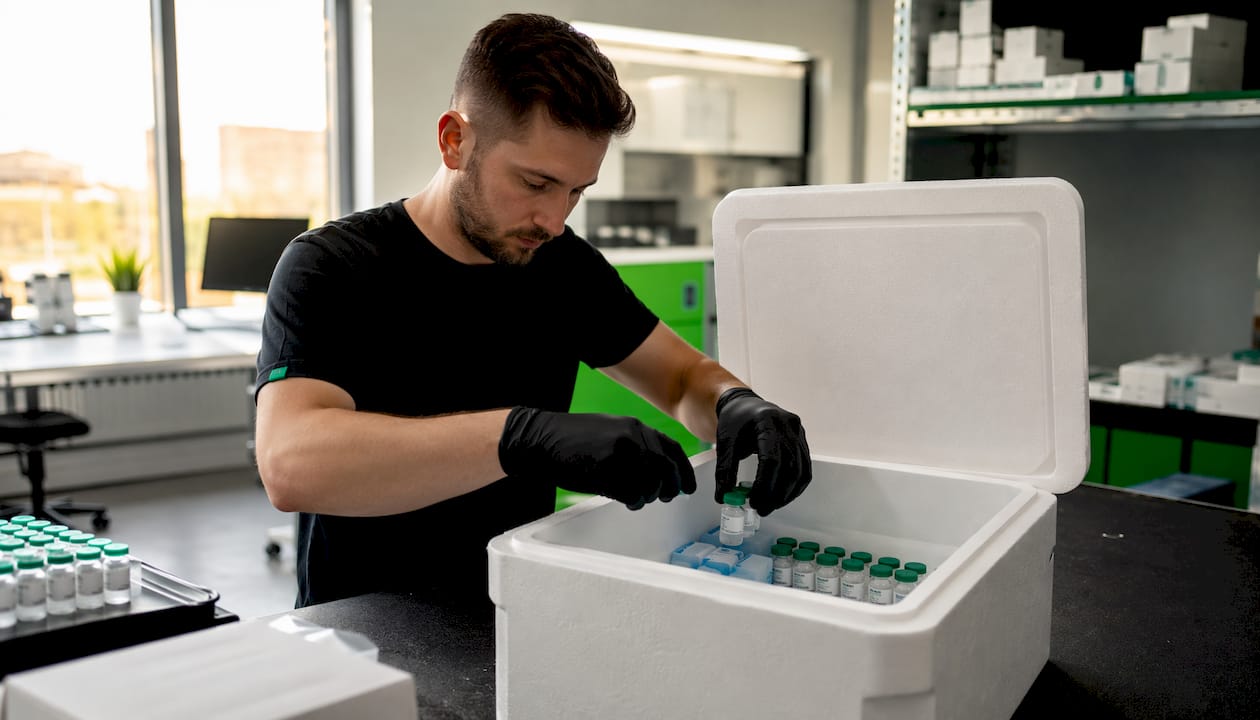
| Packaging | Temperature-protective; cold packs typically included for overnight shipment |
| Shipping origin | U.S.-based fulfillment (Neolabpeptides) |
| Standard lead time | Typically 2–5 business days within the U.S. |
| Expedited shipping | Overnight and 2-day options generally available |
| Payment methods | Credit card, institutional purchase order (confirm at checkout) |
| Return/refund policy | Request written policy before ordering; document condition at receipt |
Packaging integrity matters for lyophilized peptides. Vials should arrive sealed, with no visible moisture or cake disruption. If packaging is compromised on arrival, photograph it immediately and contact the supplier before opening the vial.
How to handle, store, and reconstitute lyophilized TB-500 safely
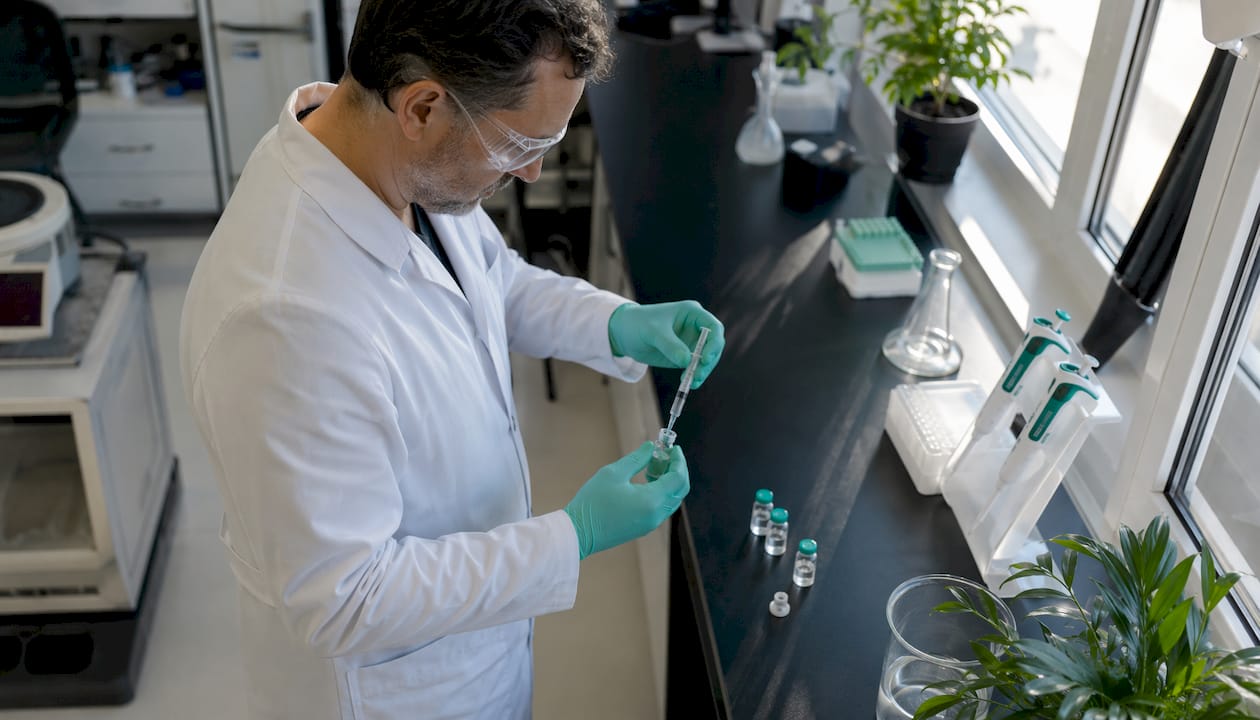
Receiving and reconstituting TB-500 correctly protects both your research data and the peptide’s bioactivity. Neolabpeptides documents solvent recommendations and reconstitution protocols that apply to lyophilized peptides including TB-500.
- Inspect on receipt. Check the vial seal, lot number, and packaging condition. Confirm the lot number matches your COA before logging the material into your inventory.
- Store lyophilized vials at the recommended frozen temperature (typically −20°C or lower) until use. Keep vials away from repeated temperature fluctuations.
- Allow the vial to equilibrate to room temperature before opening to prevent moisture condensation on the peptide cake.
- Select your reconstitution solvent. Bacteriostatic water is the most common choice for TB-500. Dilute acetic acid (typically 0.1–1% v/v) is used for peptides with lower aqueous solubility. Confirm the supplier’s recommendation for the specific lot.
- Add solvent slowly by directing it against the vial wall rather than directly onto the peptide cake. Gently swirl; do not vortex.
- Calculate your working concentration based on the vial mass and solvent volume, then aliquot into single-use volumes immediately.
- Store reconstituted aliquots at −20°C or lower. Limit each aliquot to a single freeze–thaw cycle to preserve bioactivity in cell assays.
- Label every aliquot with lot number, reconstitution date, concentration, and solvent used.
Pro Tip: Prepare single-use aliquots immediately after reconstitution rather than drawing from the same vial repeatedly. Repeated freeze–thaw cycles degrade peptide bioactivity and introduce variability that can compromise assay reproducibility.
Lyophilized TB-500 stored at recommended frozen temperatures maintains stability over the stated shelf life. Once reconstituted, the working solution is more susceptible to degradation, so aliquot size should match your single-experiment volume.
What does the research literature say about TB-500?
TB-500 (Thymosin Beta-4) appears across a range of preclinical research contexts. Published studies have examined its roles in actin sequestration and cell motility, angiogenesis, and wound-healing models. The Neolabpeptides TB-500 research overview consolidates the primary experimental contexts and points to key citations.
- Actin biology: TB-500 binds G-actin and modulates cytoskeletal dynamics, making it relevant to cell motility and migration assays.
- Angiogenesis models: Preclinical studies have used TB-500 in endothelial cell assays and in vivo vascular models.
- Wound-healing and tissue repair: Multiple published studies have evaluated TB-500 in dermal and corneal wound models.
- In vitro formats: Cell-culture supplementation and receptor-binding assays are the most common laboratory applications.
- Preclinical animal models: Used under RUO conditions in rodent models examining tissue regeneration endpoints.
Purity and lot consistency directly affect experimental reproducibility. A vial with undocumented purity or inconsistent lot-to-lot composition introduces a variable that cannot be controlled for in the analysis. This is why the COA’s numeric HPLC value matters as much as the purity claim itself.
U.S. regulatory and compliance considerations for purchasing TB-500
Compliance documentation is not optional for institutional labs. Neolabpeptides provides RUO labeling and COA/SDS documentation aligned with U.S. GMP manufacturing standards.
- RUO labeling: Confirm the vial and packaging carry a clear research-use-only statement. This designation is required for institutional procurement approval at most universities and research centers.
- Not for human or veterinary use: This restriction must appear in your procurement records and internal lab documentation.
- Documents to archive: COA (lot-specific), SDS, purchase order, and shipment receipt. Keep these on file for the duration of the research project and any subsequent audit period.
- Institutional review: Involve your procurement office, biosafety officer, or compliance team before ordering if your institution requires pre-approval for research chemicals.
- Chain of custody: Record the lot number, receipt date, storage location, and any transfers between lab personnel.
This article provides general information for research procurement purposes. Confirm current regulatory requirements with your institution’s compliance office or a qualified regulatory professional before purchasing.
Pre-purchase checklist: questions to ask before you order
Use this checklist in your supplier inquiry email or procurement request to confirm quality and fulfillment terms before payment.
Documents to request:
- COA for the specific lot you will receive (not a generic or sample COA)
- Numeric HPLC purity percentage on the COA
- Mass spectrometry confirmation file referencing the same lot number
- Downloadable chromatogram and mass spectra files
- Current SDS for TB-500
Product and fulfillment questions:
- What is the vial size (5 mg or 10 mg) and is the product lyophilized?
- What reconstitution solvent does the supplier recommend for this lot?
- What is the shipping origin and expected lead time to your U.S. address?
- What are the return and refund terms if the vial arrives damaged or fails your incoming QC?
- Is institutional purchase order (PO) invoicing available?
Record-keeping steps:
- Log the lot number in your lab inventory system at receipt.
- Store the COA and SDS with your purchase records for reproducibility and audit purposes.
- Cross-reference the COA lot number against the peptide testing kit guide to verify incoming material before use.
When verifying an incoming lot, match the HPLC retention time and mass-spec m/z values on the COA to the chromatogram file supplied. Mismatched metadata (lot number or test date discrepancies between the vial label and the COA) is a red flag that warrants quarantining the material until the supplier resolves the discrepancy.
Key Takeaways
Purchasing research-grade TB-500 requires a lot-specific COA with numeric HPLC purity (≥98%) and mass spectrometry confirmation, U.S.-based shipping, and complete RUO documentation before any order is placed.
| Point | Details |
|---|---|
| Purity standard | Require high purity by HPLC with mass spectrometry confirmation on the same lot number. |
| COA is lot-specific | A generic certificate is insufficient; the COA must reference the exact lot number on your vial. |
| Storage and handling | Store lyophilized vials frozen; aliquot reconstituted material into single-use volumes immediately. |
| Compliance documentation | Archive COA, SDS, purchase order, and shipment records for every lot used in research. |
| Recommended U.S. supplier | Neolabpeptides supplies TB-500 in standard lyophilized vials with COA and third-party HPLC/MS verification. |
Why lot-specific documentation matters more than purity claims alone
The peptide research market has a documentation problem that purity percentages alone cannot solve. A supplier can print “≥98% purity” on a product page without ever providing the chromatogram that proves it. The COA is only as useful as the specificity of its data: a numeric HPLC retention time, a mass-spec m/z value, and a lot number that matches the vial in your hand. Without that chain of evidence, the purity claim is marketing copy, not analytical data.
What researchers often underestimate is how much lot-to-lot variability affects assay reproducibility, even when nominal purity stays above 98%. A supplier who provides downloadable raw chromatograms for every lot is giving you the ability to detect that variability before it contaminates your dataset. That is a fundamentally different level of transparency than a PDF certificate with a single percentage.
The RUO designation also carries more institutional weight than many buyers realize. At universities and research centers with active compliance programs, procurement of RUO-labeled research chemicals requires documentation that satisfies both the biosafety office and the purchasing department. Ordering from a supplier who cannot provide a current SDS and a lot-traceable COA creates a compliance gap that falls on the researcher, not the vendor.
Neolabpeptides TB-500: research-grade, COA-included, ready to order
Neolabpeptides offers a direct path to verified, research-grade TB-500 without the documentation gaps that slow down institutional procurement. Their TB-500 is available in 5 mg and 10 mg lyophilized vials, each backed by a lot-specific COA with numeric HPLC and mass spectrometry data.

Every order ships from the U.S. with temperature-protective packaging. The COA and SDS are available for each lot, satisfying the documentation requirements most institutional buyers need before a purchase order can be approved. The product carries a clear RUO label and is not for human or veterinary use. To place an order, visit the Neolabpeptides product catalog, select your vial size, and request the lot-specific COA and SDS at checkout or by contacting the team directly before shipment.
Useful sources and manufacturer resources
- Neolabpeptides TB-500 (10 mg) product page: Direct ordering page with COA references and product specifications.
- TB-500 Research Overview, Neolabpeptides: Summary of laboratory applications, experimental contexts, and primary citations.
- Peptide Third-Party Testing Guide, Neolabpeptides: Explains HPLC and MS testing standards and what to look for on a COA.
- GMP Quality Criteria, Neolabpeptides: Top 10 quality checkpoints for peptide procurement.
- Peptide Testing Kit Guide, Neolabpeptides: Practical incoming QC steps and record-keeping guidance.
- PubChem: Thymosin Beta-4: Chemical identity and structural data for TB-500.
- PubMed: TB-500 wound-healing study: Primary literature on TB-500 in tissue repair models.
- PMC: Angiogenesis research: Peer-reviewed study on TB-500 in vascular biology contexts.
Download COAs and SDS files directly from the Neolabpeptides product pages and save the lot number with your purchase records. This single step protects both your experimental reproducibility and your institutional compliance documentation.
Recommended
This article summarizes published research for informational purposes. Products sold by Neo Lab Peptides are for laboratory research use only and are not intended for human or animal use.